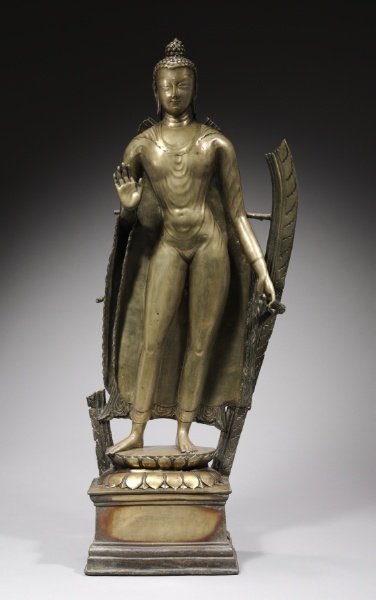
Standing Buddha
c. 900
India, Kashmir
Videos
What's the Story?
Devotional Sculpture
See Also
Visually Similar Artworks
Contact us
The information about this object, including provenance, may not be currently accurate. If you notice a mistake or have additional information about this object, please email collectionsdata@clevelandart.org.
To request more information about this object, study images, or bibliography, contact the Ingalls Library Reference Desk.
All images and data available through Open Access can be downloaded for free. For images not available through Open Access, a detail image, or any image with a color bar, request a digital file from Image Services.