The Cleveland Print Room and the Cleveland Museum of Art Present Improper Frames
- Press Release
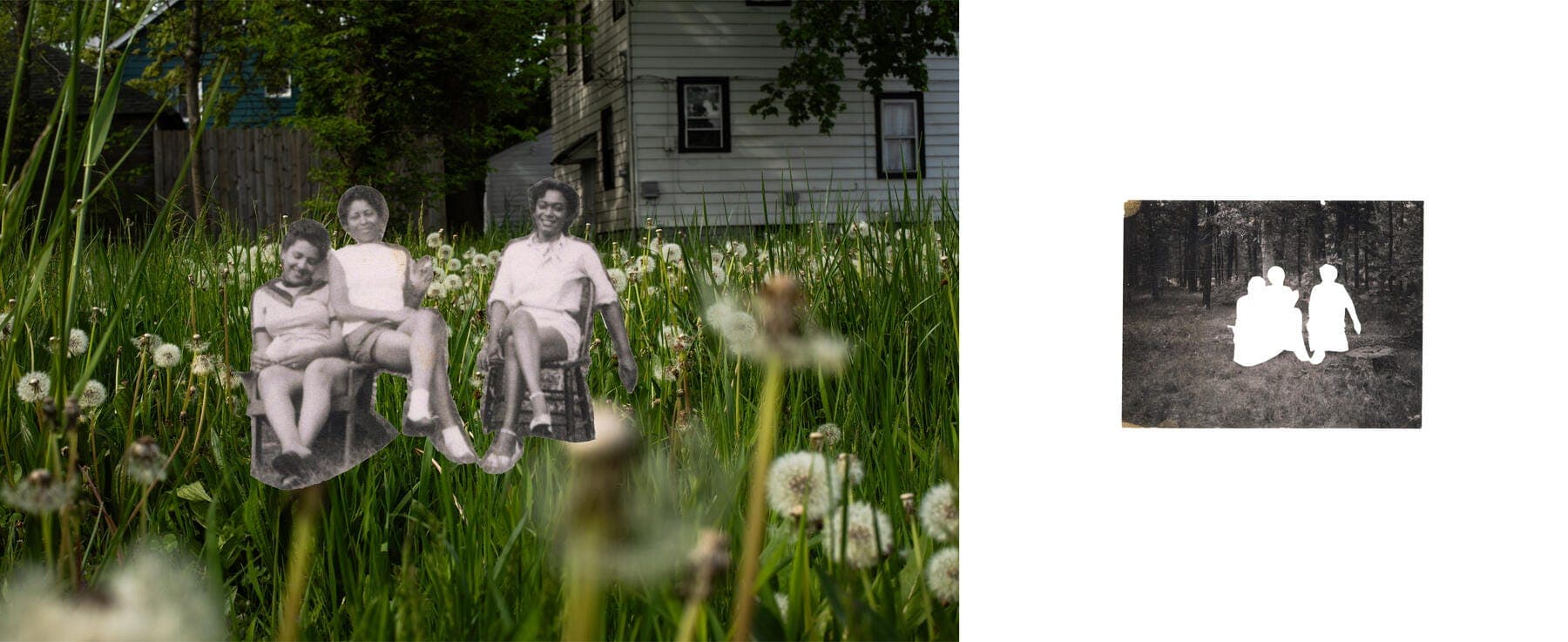
Leisure, part of They Danced on This Land, 2025. Da’Shaunae Marisa. Courtesy of the artist
Contact the Museum's Media Relations Team:
(216) 707-2261
marketingandcommunications@clevelandart.org
On view at the CMA’s Transformer Station from February 14 through May 10, 2026
CLEVELAND—(February 13, 2026)—In partnership with Cleveland Print Room, the Cleveland Museum of Art presents Improper Frames at Transformer Station, the museum’s satellite location in Ohio City’s Hingetown neighborhood. On view from February 14 through May 10, 2026, this free exhibition brings together artists and photographers working through Cleveland’s internal boundaries, partial views, and shifting frames. Their works engage a city recently rendered legible through a comprehensive property inventory, classifying and evaluating land across the city. The exhibition features work by Amber Ford, Jon Gott, Michael Indriolo, Da’Shaunae Marisa, Vivica Satterwhite, and Alejandro Vergara, and is curated by Theodossis Issaias.

Original Property Inventory
Between 2022 and 2023, a citywide property inventory was conducted by municipal and nonprofit partners. Two-person teams walked every street, day after day, for six months. Equipped with tablets and a GIS-linked survey application, they moved parcel by parcel through the city, documenting conditions, classifications, and risks from the public right-of-way. This exhaustive survey recorded approximately 162,000 parcels and buildings across Cleveland. As an administrative instrument, the inventory presents itself as a factual account of what exists. Yet in quietly assembling data, images, and categories, it also participates in shaping how Cleveland narrates its future—what can be seen, valued, developed, or left aside.
“Property inventories do more than document space,” said Theodossis Issaias, curator of Improper Frames. “They convert lived environments into data—parcels, conditions, and use codes that can be compared, ranked, and acted upon. Generated by governing authorities and circulated across planning, development, and policy, such data rarely announces its consequences. Its effects are incremental and procedural, guiding decisions that unfold unevenly across neighborhoods, blocks, and thresholds.”

Photography formed a required component of this process, with at least one image recorded for each parcel, captured in real time and embedded directly into a database designed to support enforcement decisions, demolition assessments, and reinvestment strategies.
“The photograph functioned less as representation than as verification: a visual trace anchoring numeric assessments and spatial metrics,” said Kerry Davis, director, Cleveland Print Room. “Surveyors’ shadows slip into frame. Windows glare white. Focus drifts. Fingers obscure lenses. Later, license plates are algorithmically blurred. Fatigue, glare, haste, and weather register unintentionally, exposing the bodily and logistical circumstances of data collection. They are not evidence of conditions so much as evidence of the conditions under which evidence is produced.”

Improper Frames
Across Improper Frames, irreverent trees defy property lines, photographic assemblies gather displaced stories, and dust builds an index inside a home—material traces that the property survey does not account for. A vacant lot appears not only as a parcel for development but as a former cosmetology school, a church, the site of a first fleeting kiss. A stream flows without regard for ownership. Such scenes introduce counterevidence: lives, residues, intimacies, and temporalities that resist classification.

“Here, photography operates as a record—situated, partial, fallible, and shaped by proximity,” continued Davis. “Developed through an open call, workshops, and sustained, iterative work across the city’s shifting terrain, the projects gathered in Improper Frames use photographic practice to register what escapes administrative description.”

“Together, artists Amber Ford, Jon Gott, Michael Indriolo, Da’Shaunae Marisa, Vivica Satterwhite, and Alejandro Vergara propose improper frames not as errors, but as necessary openings: ways of accounting for a city that cannot be fully contained by the documents that seek to define it,” said Issaias.
Visitors are invited to view Improper Frames at Transformer Station Thursdays, Saturdays and Sundays, 12:00 p.m.—6:00 p.m. and Fridays, 12:00 p.m.—8:00 p.m.
***
Cleveland Print Room
Cleveland Print Room is a nonprofit organization dedicated to advancing the art and appreciation of the photographic image in all its forms. Based in Cleveland, it provides affordable access to a community darkroom and workspace, presents exhibitions, and supports artists through education, production facilities, and collaborative public programs. Cleveland Print Room functions as both a site of making and a platform for sustained photographic practice, foregrounding photography as a tool for collective learning and civic participation. For more information, visit clevelandprintroom.com.
Transformer Station
Transformer Station is a vibrant center for the visual and performing arts, where the Cleveland Museum of Art presents the work of emerging artists, time-based media, live music, and dynamic social experiences in Ohio City’s Hingetown neighborhood. For more information, visit www.clevelandart.org/transformer-station.
About the Cleveland Museum of Art
The Cleveland Museum of Art (CMA) is renowned for the quality and breadth of its collection, which includes more than 66,500 artworks and spans 6,000 years of achievement in the arts. The museum is a significant international forum for exhibitions, scholarship, and performing arts and is a leader in digital innovation. One of the foremost encyclopedic art museums in the United States, the CMA is recognized for its award-winning open access program—which provides free digital access to images and information about works in the museum’s collection—and is free of charge to all. The museum is located in the University Circle neighborhood with two satellite locations on Cleveland’s west side: the Community Arts Center and Transformer Station.
The museum is supported in part by residents of Cuyahoga County through a public grant from Cuyahoga Arts & Culture and made possible in part by the Ohio Arts Council (OAC), which receives support from the State of Ohio and the National Endowment for the Arts. The OAC is a state agency that funds and supports quality arts experiences to strengthen Ohio communities culturally, educationally, and economically. For more information about the museum and its holdings, programs, and events, call 888-CMA-0033 or visit cma.org.