Artwork Page for Imperial Eagle

Details / Information for Imperial Eagle

Imperial Eagle

100 BCE–100 CE
Measurements
Overall: 12.1 x 6.9 x 9.7 cm (4 3/4 x 2 11/16 x 3 13/16 in.)
Credit Line
Public Domain
You can copy, modify, and distribute this work, all without asking permission. Learn more about CMA's Open Access Initiative.
Location
103 Roman
?

Did You Know?

The eagle was a symbol of the Roman Empire and its military.

Description

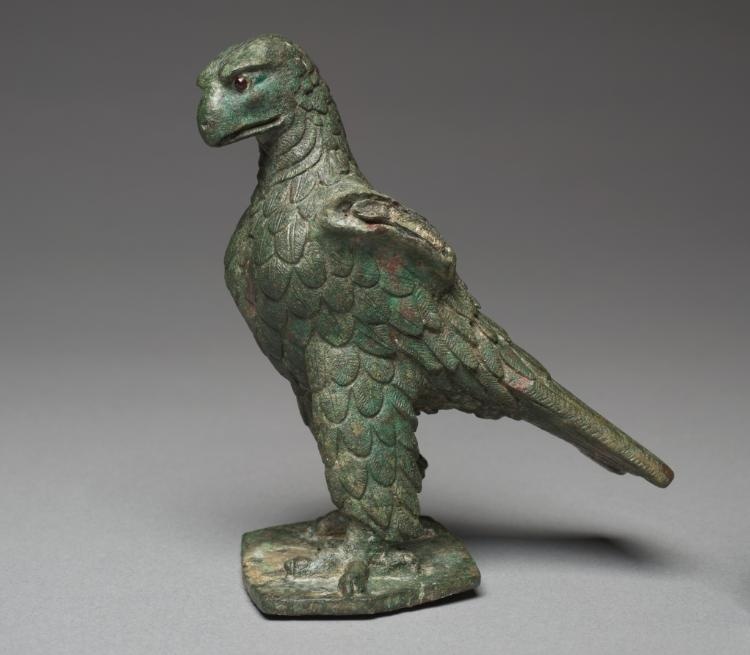
This eagle stands on an integrated bronze base with overlapping ovoid-shaped feathers creating a layered pattern across its body, and its tail feathers fanned out. The wings, now lost, were likely cast separately in bronze and then soldered or welded to the bird’s body. The eyes are inlaid with red stones believed to be garnets. The eagle is associated with Jupiter, king of the gods, and the Roman poets Virgil and Horace described the birds as the bearers of his thunderbolt. While eagles were often depicted on Roman coins, the bird is rarely depicted in the round in Roman art.
A bronze eagle with a mottled green and brown patina stands on a flat, irregular base. Turning its head to the left, the bird features a hooked beak and dark red garnet eyes. Overlapping feather patterns texture the body and legs. A long tail extends toward the right, and the right wing is broken, leaving a jagged fragment at the shoulder.

Imperial Eagle

100 BCE–100 CE

probably Syria, Roman

See Also
Visually Similar by AI

Contact Us

The information about this object, including provenance, may not be currently accurate. If you notice a mistake or have additional information about this object, please fill out the appropriate request form linked below:

Update or Correct Artwork Information

Imagery or Rights for Non-Open-Access Artworks

Report a Website Issue

Further Questions About This Artwork