Cleveland Museum of Art Celebrates Inaugural Class of University Fellows
- Blog Post
- Education
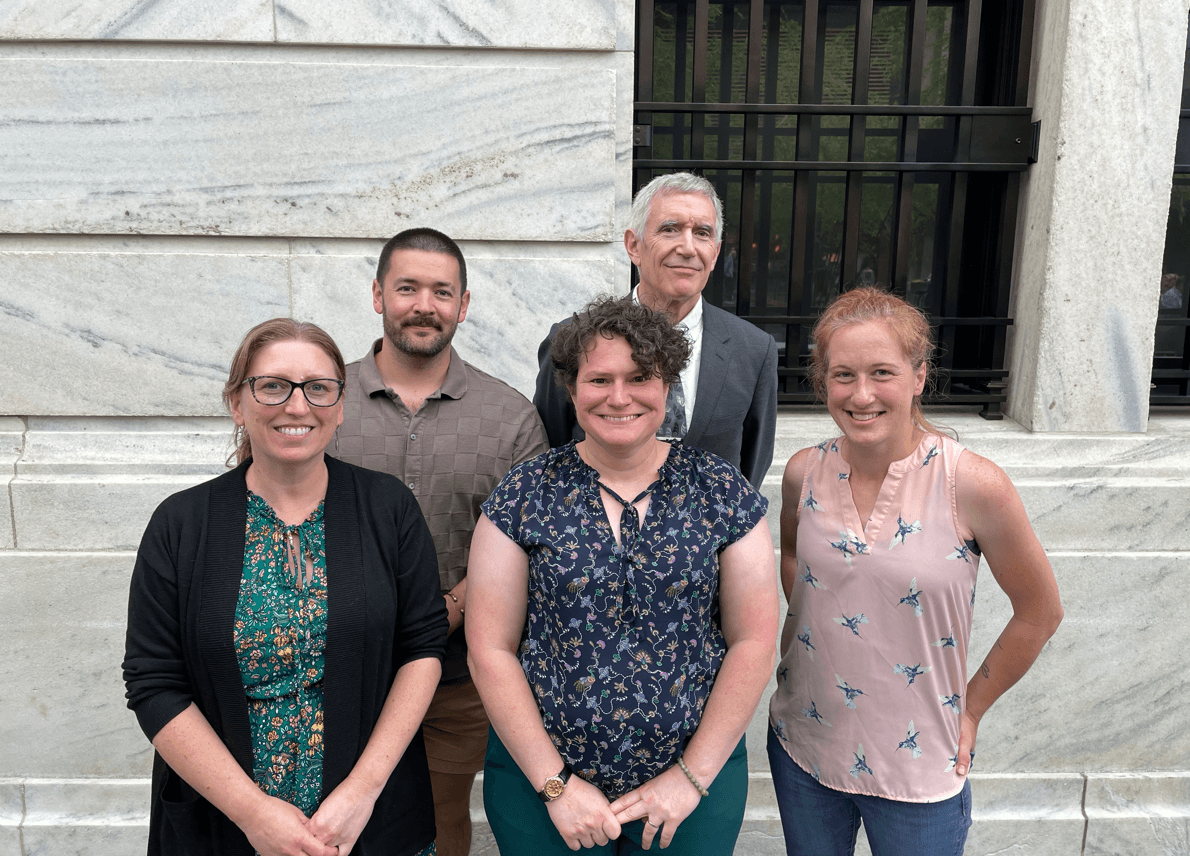
University Fellows. Front row left to right: Dr. Vicki Daniel, Dr. Gabrielle Parkin, Dr. Melissa Clark. Back row left to right: Dr. Joseph L. Underwood, Dr. Timothy Wutrich
In the summer of 2026, the department of academic affairs at the Cleveland Museum of Art launched a pilot professional development program for university faculty. Titled University Fellows, the program was designed to introduce university faculty to museum education theory and contemporary gallery teaching strategies. The goal of the week-long intensive program was to provide participating faculty with the knowledge and skills needed to confidently integrate strategies for teaching with works of art in standard classroom curriculum and instruction.
Five faculty members from Case Western Reserve University, Cuyahoga Community College, and Kent State University—representing a wide range of academic disciplines, including classics, anthropology, art history, and literature—spent each day at the museum engaging in discussion and activities in both classroom and gallery settings. Prior to arriving, fellows read scholarly articles on topics related to museum education, history, and contemporary theory. These articles were intended to provide the fellows with a broad introduction to the concepts and issues concerning contemporary practice in the field of museum education and the material to guide initial discussions on the first day of the program. In addition to discussion, the first day was also spent introducing the fellows to the CMA’s collection. As the fellows were guided through the museum’s galleries, they connected their observations and insights with those from the readings and discussions, developing a more well-rounded impression of the museum and its collection, and made connections with broader contemporary museum practice.

After the initial overview and discussion on day one, day two introduced the fellows to the essential facilitation strategies that museum educators use to engage visitors in unique experiences with works of art. These teaching strategies emphasize slowing down and looking closely at art while asking questions, encouraging curiosity, inquiry, experimentation, and discovery while simultaneously providing audiences with opportunities to find personal connections with artworks. This was also the first opportunity for the fellows to participate in discussions about artworks and to experiment with the ideas and theories they had read and discussed.
Over the remaining days of the program, fellows practiced a method of curriculum development that incorporates gallery instruction followed by a full day devoted to research and planning for their final presentations. The participants were encouraged to first consider what the learning goals and main questions would be for their presentation and then determine which artworks and subject content would be most relevant and appropriate. These elements were combined with a facilitation strategy that fellows felt was most appropriate to achieve their learning goals.

On the last day of the program, we gathered at the museum for the final presentations. Each fellow designed a 20-minute engagement in the gallery that incorporated content from their respective disciplines with artwork, art content, and museum education methodologies. Going beyond straightforward explanations of art content, the fellows’ presentations used close observation, critical inquiry, and engagement strategies to introduce material in a way that established relevance and context for a more robust and impactful learning experience with works of art.
The value of the university fellows pilot program is expressed in the reflections of the first class of faculty participants. Dr. Joseph L. Underwood, associate professor of art history at Kent State University, found value in the collaborative spirit of the program and the opportunity to evaluate practice in a new context. “I appreciated the opportunity to connect with faculty from the region in this hands-on intensive week in the museum. It challenged my preconceptions to discuss the artwork across our disciplinary expertise, and now I have fine-tuned some object-centered exercises that I’m applying to my courses at Kent State.”

One of the foundational goals of the pilot program was to provide faculty a space to join a community of learning where a disparate group of educators could come together to share one another’s collective experience toward learning and growing as one. For Dr. Melissa Clark, professor of anthropology at Cuyahoga Community College, finding community was one of the key outcomes of participating in the pilot program. “Synergy is probably an overused buzzword, but that’s the main thing I took away from this program—a small group of enthusiastic, smart people with diverse experiences and expertise came together to learn how to be better teachers, resulting in an experience that was greater than the product of any one of our individual minds.”
Dr. Timothy Wutrich, senior instructor of classics at Case Western Reserve University, also appreciates the collaborative nature of the program while finding further value in the program’s design. “The program offered a thought-provoking series of readings, intense, meaningful discussions of art and education, and the opportunity to put into practice some of the things we learned, all within the walls of the Cleveland Museum of Art,” he said. “The colleagues in the program were also wonderful and this, for me, was one of the chief attractions of the program. I enjoy meeting and collaborating with others across the disciplines and, indeed, across institutions.”

Although the program concluded at the end of June, the participating faculty have already found opportunities to put into practice the lessons learned, both for their own personal benefit and that of their students. “I have already started using some of the strategies we learned,” said Dr. Clark. “I wandered into my colleague’s class . . . and he had this painting displayed on his PowerPoint. We practiced close observation and interpretation. I learned [in the program] how to interact with and experience art in a whole new way, and most importantly, learned strategies that will help my students slow down and embrace deep learning. I recommend this program to any faculty member looking to develop students’ creativity, empathy, and critical analysis.”
Dr. Vicki Daniel, lecturer in the Department of English at Case Western Reserve University, applies the program’s lessons in visits to other art museums, saying, “I’ve been in Providence for the last week and have thought about our time together frequently. At the Rhode Island School of Design Museum, I found myself using some of our exercises to look closely at the work.”
Dr. Daniel summarizes the experience, and the value of the program overall, stating, “The university fellows program was a great chance to learn more about the theories and practices of museum education, and I really valued the opportunity to meditate on what we learned in the gallery spaces. . . . I would highly recommend this program for those who want to think more deeply about the value of museum collections and wish to experiment with integrating the CMA into their classes.”