The Cleveland Museum of Art
Collection Online as of April 24, 2024
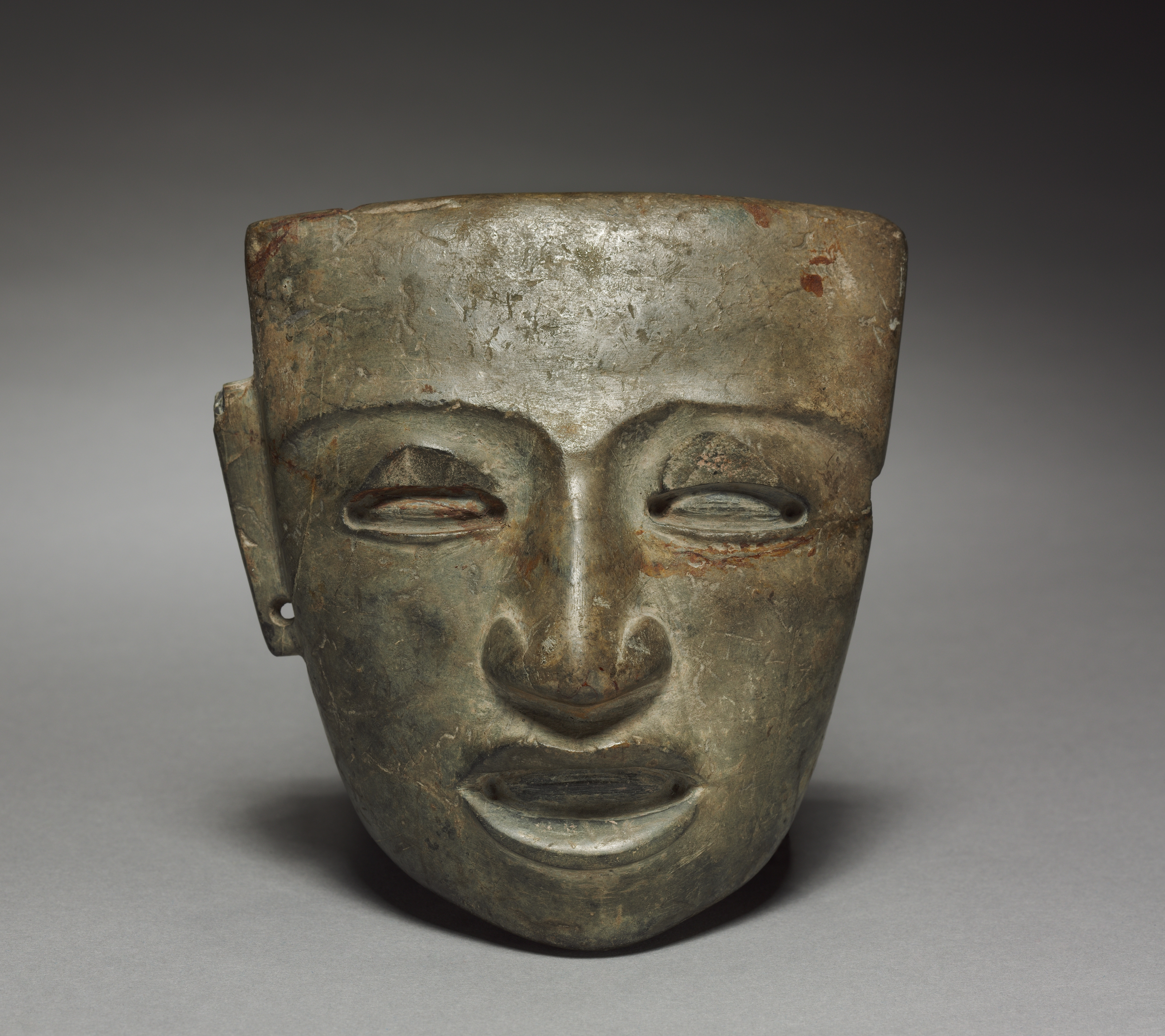
Mask
1–550 CE
Overall: 13.4 x 12.8 x 6.7 cm (5 1/4 x 5 1/16 x 2 5/8 in.)
The Norweb Collection 1950.409
Location: 233 Mesoamerican and Intermediate Region
Did You Know?
These stone masks have been found near temples, but not in homes or burials.Description
Many Teotihuacán masks were once tied to something via holes on the back--perhaps a body-shaped form dressed in garments, ornaments, and a headdress that identified the figure. The stone masks’ eyes and mouths once held inlays representing irises, pupils, and teeth.- ?-1950Raymond Henry Norweb [1894-1983] and Emery May Holden Norweb [1895-1984], Cleveland OH, 1950, given to the Cleveland Museum of Art1950The Cleveland Museum of Art
- Young-Sánchez, Margaret. "Veneration of the Dead: Religious Ritual on a Pre-Columbian Mirror-Back." The Bulletin of the Cleveland Museum of Art 77, no. 9 (1990): 326-51. Reproduced and Mentioned: p. 328-29 www.jstor.org
- Cleveland, OH. The Cleveland Museum of Art; Novemeber 9. 1945-January 6, 1946. "Art of the Americas."
- {{cite web|title=Mask|url=false|author=|year=1–550 CE|access-date=24 April 2024|publisher=Cleveland Museum of Art}}
Source URL:
https://www.clevelandart.org/art/1950.409