Artwork Page for Bodhidharma on a Reed

Details / Information for Bodhidharma on a Reed

Bodhidharma on a Reed

蘆葉達磨図

1500s
(Japanese)
Measurements
Painting: 88.8 x 33.7 cm (34 15/16 x 13 1/4 in.); Mounted with knobs: 172.4 x 50.7 cm (67 7/8 x 19 15/16 in.)
Public Domain
You can copy, modify, and distribute this work, all without asking permission. Learn more about CMA's Open Access Initiative.
Location
Not on view
?

Did You Know?

His scowling facial expression not only signifies the determination with which he pursues religious enlightenment, but also discourages followers who are not similarly motivated.

Description

Chan (Japanese: Zen) Buddhism was introduced to China in the early 500s by Indian monk Bodhidharma (Japanese: Bodai Daruma; died before 534). It is said that upon his arrival in China, Bodhidharma was permitted to meet with Emperor Wu (reigned 502–49) of the Liang dynasty. Realizing the emperor did not understand his religious goals, the monk left and crossed the Yangzi River on a reed, settling in Henan Province’s Shaolin Monastery.
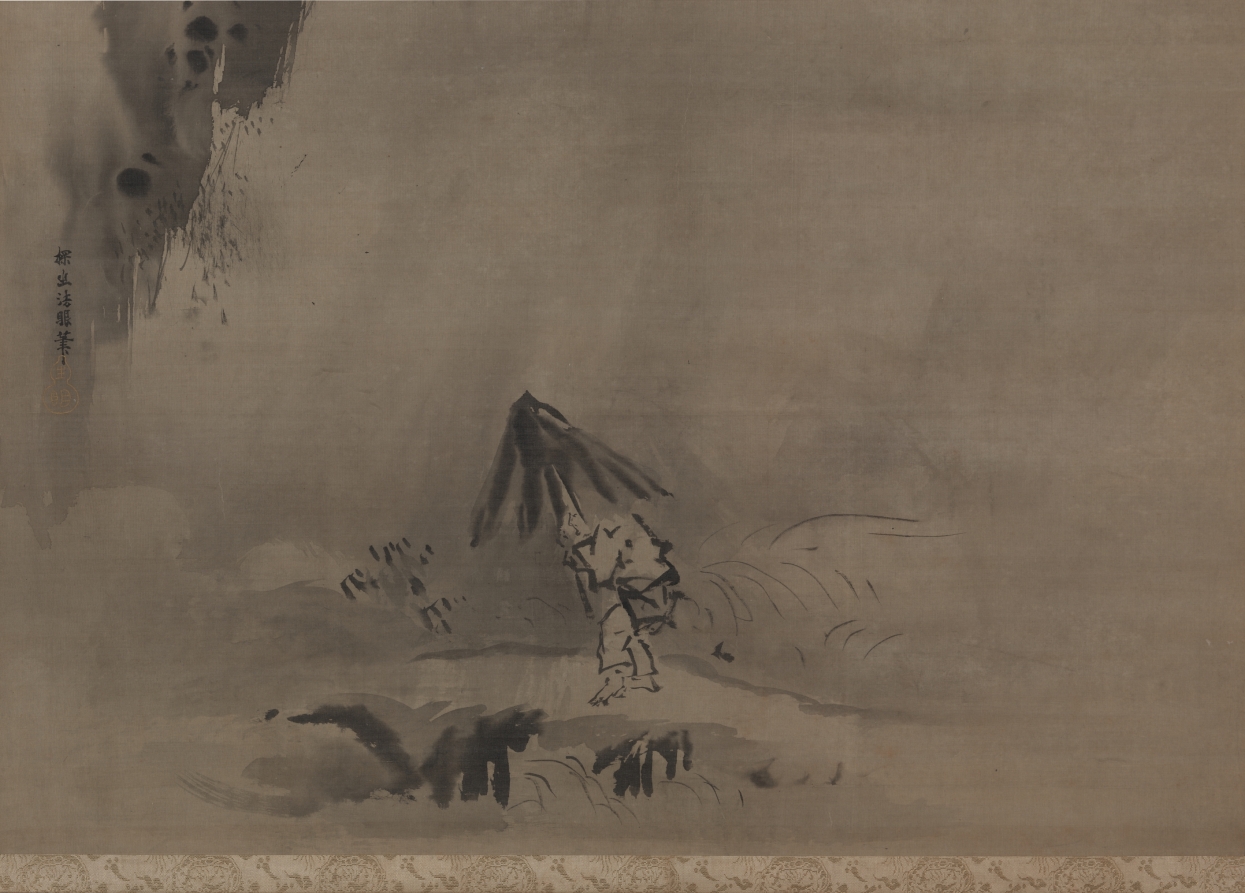
A hanging scroll in ink and muted color depicts the patriarch Daruma, a man with a light skin tone, standing on a thin reed atop swirling water. Facing slightly right, his muted red robe hangs open to reveal his hairy chest. He holds a ringed staff, and large eyes gaze from beneath thick brows and a dark beard. Bold, calligraphic strokes define the reed and waves below, while the upper background remains empty and atmospheric.

Bodhidharma on a Reed

1500s

Shingo

(Japanese)
Japan, Muromachi period (1392–1573)

See Also
Visually Similar by AI

Contact Us

The information about this object, including provenance, may not be currently accurate. If you notice a mistake or have additional information about this object, please fill out the appropriate request form linked below:

Update or Correct Artwork Information

Imagery or Rights for Non-Open-Access Artworks

Report a Website Issue

Further Questions About This Artwork