Artwork Page for Mask of an Elder
Details / Information for Mask of an Elder
Mask of an Elder
노인탈 (老人面具)
1800s
(1392–1910)
Medium
wood with horsehairMeasurements
Mask: 20.3 x 6.1 cm (8 x 2 3/8 in.)Credit Line
You can copy, modify, and distribute this work, all without asking permission. Learn more about CMA's Open Access Initiative.
Location
Not on view?
Did You Know?
Description
The traditional Korean mask dance is a form of drama featuring the wearing of masks such as this one, singing and dancing. It was originally a regional term only applied to mask dances traditional to Hwanghae Province. During the Joseon dynasty (1392–1910), the dance rose to popularity among villagers as a means of self-expression and liberation, often criticizing injustice of society.Talchum: The Traditional Mask Dance of South Korea
South Korea offers a vast array of experiences that are both dynamic and reverent to its rich ancient heritage. With 5,000 years of fascinating history and culture, we offer you the opportunity to encounter Talchum, a traditional mask dance-drama that captures the essence of its Shamanic beliefs in various regions throughout centuries.
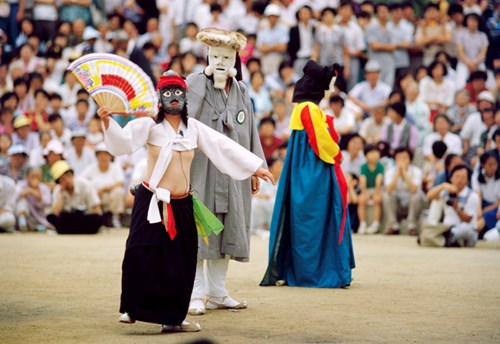
Talchum is a traditional Korean mask dance drama. Literally translated to “mask dance,” it displays the people’s close connection with village communities, which had long been the basis of Korean culture and tradition.
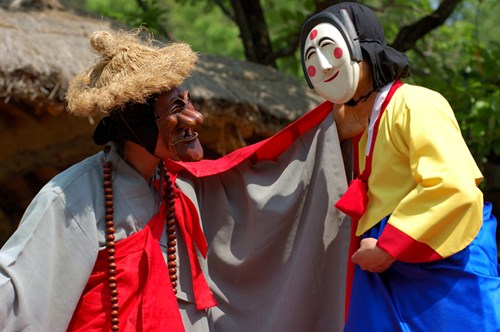
Talchum was derived from Shamanic rituals to pray for abundant harvest, peace, prosperity, and protection against evil spirits. As civilization developed, masks gradually evolved from sacred objects used in shamanism to becoming forms of entertainment and expression.In the Joseon period (1392–1910), the dance rose to popularity among villagers as a means of self-expression and liberation. Talchum signified the spirit of the oppressed through dance. These masked performances told stories that criticized an unjust society or ruling class, and expressed the people’s desire for a reformed world. The main themes of Talchum include, first, a ritual to drive away evil spirits; second, ridicule of apostate Buddhist monks; third, insult the hypocrisy of noblemen; and fourth, tragedy arising from conflict among spouses and the joys or sorrows of everyday life.

Mask of an Elder
1800s
Korea, Joseon dynasty (1392–1910)
See Also


Visually Similar by AI
Contact Us
The information about this object, including provenance, may not be currently accurate. If you notice a mistake or have additional information about this object, please fill out the appropriate request form linked below:
Update or Correct Artwork Information