Artwork Page for Behind the Troglodyte Farm

Details / Information for Behind the Troglodyte Farm

Behind the Troglodyte Farm

c. 1853
(French, 1818–1882)
Measurements
Image: 50.9 x 31.1 cm (20 1/16 x 12 1/4 in.); Matted: 76.2 x 61 cm (30 x 24 in.)
Public Domain
You can copy, modify, and distribute this work, all without asking permission. Learn more about CMA's Open Access Initiative.
?

Did You Know?

Trained as a painter, Henri Le Secq was drawn to the new invention of photography in the late 1840s, less than a decade after its invention.

Description

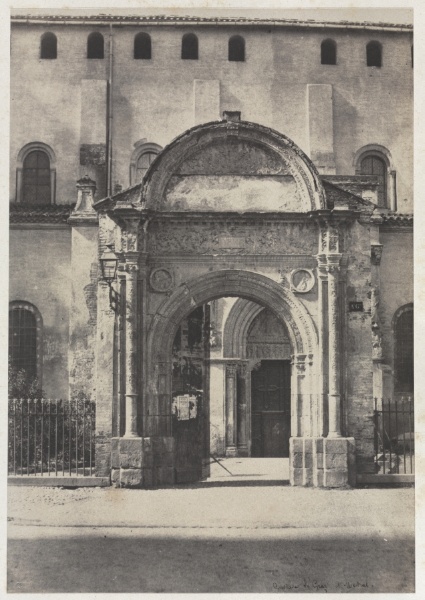
This large-scale print, exceptional for the period, belongs to a small group of photographs by Le Secq of troglodyte, or cave, dwellings in western France near the Loire River. Around the 1400s, the term troglodyte referred to groups of political activists who lived underground in order to avoid property taxes, which only applied to above-ground dwellings.
A vertically oriented salted paper print in muted brown tones depicts a narrow stone passage centered around a cavernous arched opening. Above the arch, a weathered masonry wall contains a single vertical window. To our left and right, rough stone walls frame the scene, while wooden poles lean against the base. Debris litters the dirt path, guiding the eye toward the dark interior and the dense vegetation crowning the rocky heights.

Behind the Troglodyte Farm

c. 1853

Henri Le Secq

(French, 1818–1882)
France, 19th century

See Also
Visually Similar by AI

Contact Us

The information about this object, including provenance, may not be currently accurate. If you notice a mistake or have additional information about this object, please fill out the appropriate request form linked below:

Update or Correct Artwork Information

Imagery or Rights for Non-Open-Access Artworks

Report a Website Issue

Further Questions About This Artwork