Artwork Page for Zulaykha in her palace and as an old woman with Joseph, from a Panj Ganj (Five Treasures) of Abd al-Rahman Jami (Persian, 1414–1492); verso from a Panj Ganj of Abd al-Rahman Jami (Persian, 1414–1492), with two masnavis: Yusuf va Zulaykha (Joseph and Zulaykha) and Khirad-nama-i Iskandari (Alexander’s Book of Wisdom)

Details / Information for Zulaykha in her palace and as an old woman with Joseph, from a Panj Ganj (Five Treasures) of Abd al-Rahman Jami (Persian, 1414–1492); verso from a Panj Ganj of Abd al-Rahman Jami (Persian, 1414–1492), with two masnavis: Yusuf va Zulaykha (Joseph and Zulaykha) and Khirad-nama-i Iskandari (Alexander’s Book of Wisdom)

Zulaykha in her palace and as an old woman with Joseph, from a Panj Ganj (Five Treasures) of Abd al-Rahman Jami (Persian, 1414–1492); verso from a Panj Ganj of Abd al-Rahman Jami (Persian, 1414–1492), with two masnavis: Yusuf va Zulaykha (Joseph and Zulaykha) and Khirad-nama-i Iskandari (Alexander’s Book of Wisdom)

Text copied by Sultan-Ali Mashhadi (Persian, 1453–1520) for Badi al-Zaman Mirza of Herat Painting, borders, and illumination by Mushfiq (Indian, active 1580s–early 1600s); Text copied in Herat; Painting, borders, and illuminations made in the Deccan for Mughal minister Abd al-Rahim the Khan Khanan
(Indian, active early 1600s)
(Iranian, 1430–1520)
Measurements
Page: 31.6 x 20.4 cm (12 7/16 x 8 1/16 in.)
Public Domain
You can copy, modify, and distribute this work, all without asking permission. Learn more about CMA's Open Access Initiative.
Location
Not on view
?

Did You Know?

A cheetah caught the buck, as Zulaykha hoped to catch Joseph.

Description

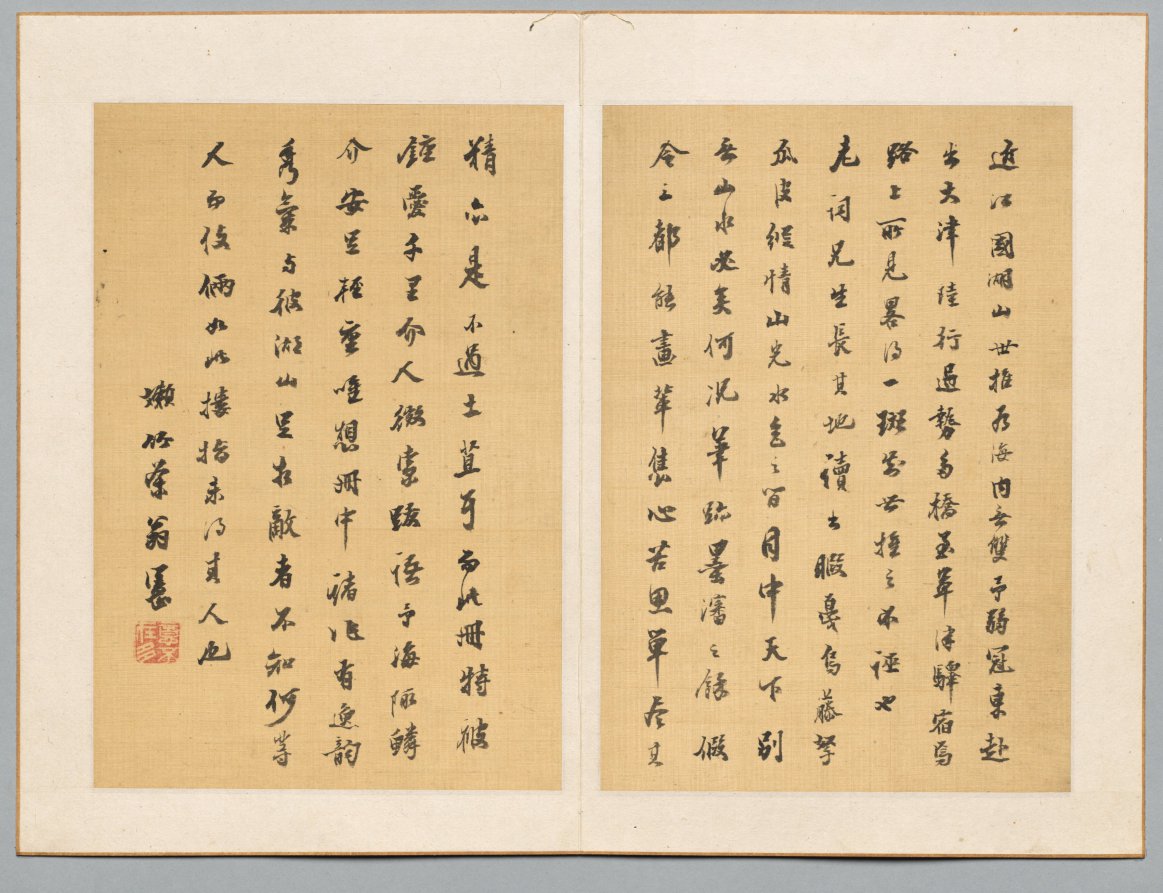
The recto of this album leaf illustrates two episodes from the story of Joseph and Zulaykha. In the first, Zulaykha awaits Joseph in the house she has built for them. She has painted the walls with romantic scenes and dressed herself alluringly with the intention of seducing him. The artist has discreetly inserted his name and the painting’s date in a brick of the house at the upper left. The virtuous Joseph, with flaming halo and eternally youthful features, rejects the married woman’s advances, but many years later, when Zulaykha is an elderly widow, they are reunited. In the second episode we see the aged Zulaykha meeting Joseph. His prayers will restore her to youthful beauty, and the two will finally be joined as lovers. The section of text on the verso from Jami’s poem of Joseph and Zulaykha, written diagonally in the margins, describes the beauties of Zulaykha’s house, in which she intends to seduce Joseph. It includes the following verses: Jeweled lamps on the walls were hung; And odorous herbs were beneath them flung. She gathered together all things most fair, And unrolled the carpet of pleasure there. But amid the charms of the sumptuous hall She longed only for Joseph, far dearer than all. A heavenly palace is dark and dim To a lover whose darling is far from him. The longing of Zulaykha for Joseph metaphorically describes an imperfect devotee’s mystical love for God. With patience, forbearance, and virtuous actions, unification with the divine will eventually occur, even for the most flawed among us. On this page also begins the Khirad-nama-i Iskandari (Alexander’s Book of Wisdom), another of the fivenarrative poems that make up the Panj Ganj.
A vertically oriented gum tempera and ink painting features layered scenes surrounded by Persian script. In the center, a woman in pink kneels within an arched room as two attendants stand to our right. Above them, two smaller arched panels depict figures in gardens. Below, an older woman with medium-light skin faces a haloed man in purple beside a gold vase. Blue and gold floral patterns frame the interior architectural scenes.

Zulaykha in her palace and as an old woman with Joseph, from a Panj Ganj (Five Treasures) of Abd al-Rahman Jami (Persian, 1414–1492); verso from a Panj Ganj of Abd al-Rahman Jami (Persian, 1414–1492), with two masnavis: Yusuf va Zulaykha (Joseph and Zulaykha) and Khirad-nama-i Iskandari (Alexander’s Book of Wisdom)

Text copied by Sultan-Ali Mashhadi (Persian, 1453–1520) for Badi al-Zaman Mirza of Herat Painting, borders, and illumination by Mushfiq (Indian, active 1580s–early 1600s); Text copied in Herat; Painting, borders, and illuminations made in the Deccan for Mughal minister Abd al-Rahim the Khan Khanan

Mushfiq, Sultan 'Ali al-Mashadi

(Indian, active early 1600s), (Iranian, 1430–1520)
Western Afghanistan, Herat (text); Mughal India (paintings)

See Also

  • Department
    Indian and Southeast Asian Art
  • Medium
    Tempera
  • Credit line
    Gift In Honor of Madeline Neves Clapp; Gift of Mrs. Henry White Cannon by Exchange; Bequest of Louise T. Cooper; Leonard C. Hanna Jr. Fund; From the Catherine and Ralph Benkaim Collection

Visually Similar by AI

Contact Us

The information about this object, including provenance, may not be currently accurate. If you notice a mistake or have additional information about this object, please fill out the appropriate request form linked below:

Update or Correct Artwork Information

Imagery or Rights for Non-Open-Access Artworks

Report a Website Issue

Further Questions About This Artwork