Artwork Page for Dish

Details / Information for Dish

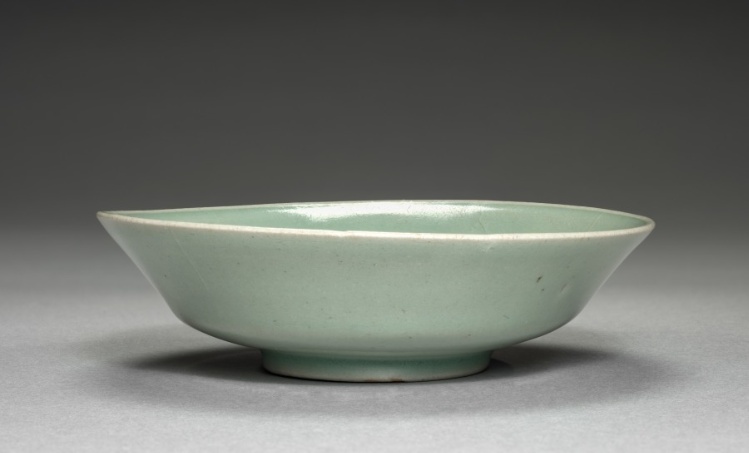
Dish

청자 접시 [靑磁楪子]

1100s
Measurements
Overall: 4 x 14.9 cm (1 9/16 x 5 7/8 in.)
Credit Line
Public Domain
You can copy, modify, and distribute this work, all without asking permission. Learn more about CMA's Open Access Initiative.
Location
Not on view
?

Did You Know?

The pale bluish glaze indicates that this dish was created in the 1100s, when the production of celadon reached its technical peak.

Description

Celadon wares used for everyday such as this dish were among the most common burial objects in tombs during the Goryeo period (918–1392). Furnishing tombs with an elaborate assemblage of objects was believed to honor and comfort the newly dead. Generally, Goryeo tombs were left untouched until the late 1800s. During the colonial period (1910–45), however, Japanese archaeologists competitively excavated the tombs located in Kaeseong, the former capital of the Goryeo period, and soon became available for Japanese and Western collectors.
A pale-green porcelain dish takes a shallow, flared shape with sides angling upward from a small circular foot. A smooth, lustrous glaze coats the vessel, reaching an uneven, undulating rim. Small dark pits and subtle irregularities mark the exterior wall. Widening significantly at the top, the vessel's muted green surface catches a soft light, casting faint shadows beneath the rim.

Dish

1100s

Korea, Goryeo dynasty (918–1392)

See Also
Visually Similar by AI

Contact Us

The information about this object, including provenance, may not be currently accurate. If you notice a mistake or have additional information about this object, please fill out the appropriate request form linked below:

Update or Correct Artwork Information

Imagery or Rights for Non-Open-Access Artworks

Report a Website Issue

Further Questions About This Artwork