Artwork Page for Chalice and Paten

Details / Information for Chalice and Paten

Chalice and Paten

c. 1450–1480
Measurements
Overall: 24.6 cm (9 11/16 in.)
Credit Line
Public Domain
You can copy, modify, and distribute this work, all without asking permission. Learn more about CMA's Open Access Initiative.

Description

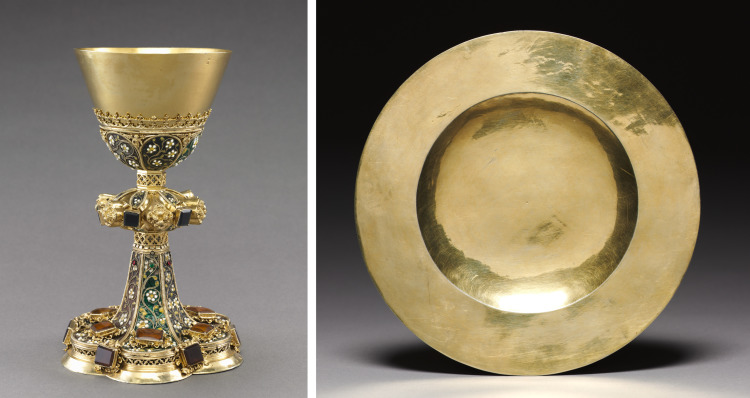
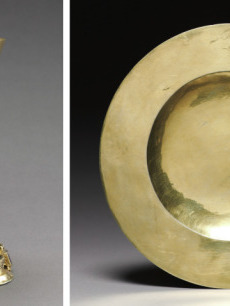
The chalice and paten—the most important liturgical vessels—are used at the altar by the priest for the consecration of the Eucharistic bread and wine during the celebration of the mass. This chalice survives with its original paten. The form of the chalice evolved over the centuries. Gothic chalices, like this one, gradually developed angular or faceted knops, generally hexagonal, with lobed feet. This sublime example is decorated with filigree enamel consisting of twisted gold wire forming a floral design, which in turn is filled with colorful glass pastes. Gemstones add to the embellishment.
A gilt silver chalice and paten set features intricate filigree enamel work. The chalice's smooth, gold-colored bowl sits atop a delicate wirework collar. Its stem includes a thick knop set with dark square stones. The flared, lobed base is adorned with green, white, and black floral enamel and brown gemstones. To its right, the circular paten is a reflective, gold-colored plate with a shallow recessed center and a broad, plain rim.

Chalice and Paten

c. 1450–1480

Hungary, Budapest?, 15th century

See Also
Visually Similar by AI

    Contact Us

    The information about this object, including provenance, may not be currently accurate. If you notice a mistake or have additional information about this object, please fill out the appropriate request form linked below:

    Update or Correct Artwork Information

    Imagery or Rights for Non-Open-Access Artworks

    Report a Website Issue

    Further Questions About This Artwork