September Exhibitions and Event Listings for the Cleveland Museum of Art
- Press Release
Contact the Museum's Media Relations Team:
(216) 707-2261
marketingandcommunications@clevelandart.org
Events
MIX: 90s Homecoming
Friday, September 5, 2025, 6:00–10:00 p.m.
Ames Family Atrium
MIX is a 21+ event.
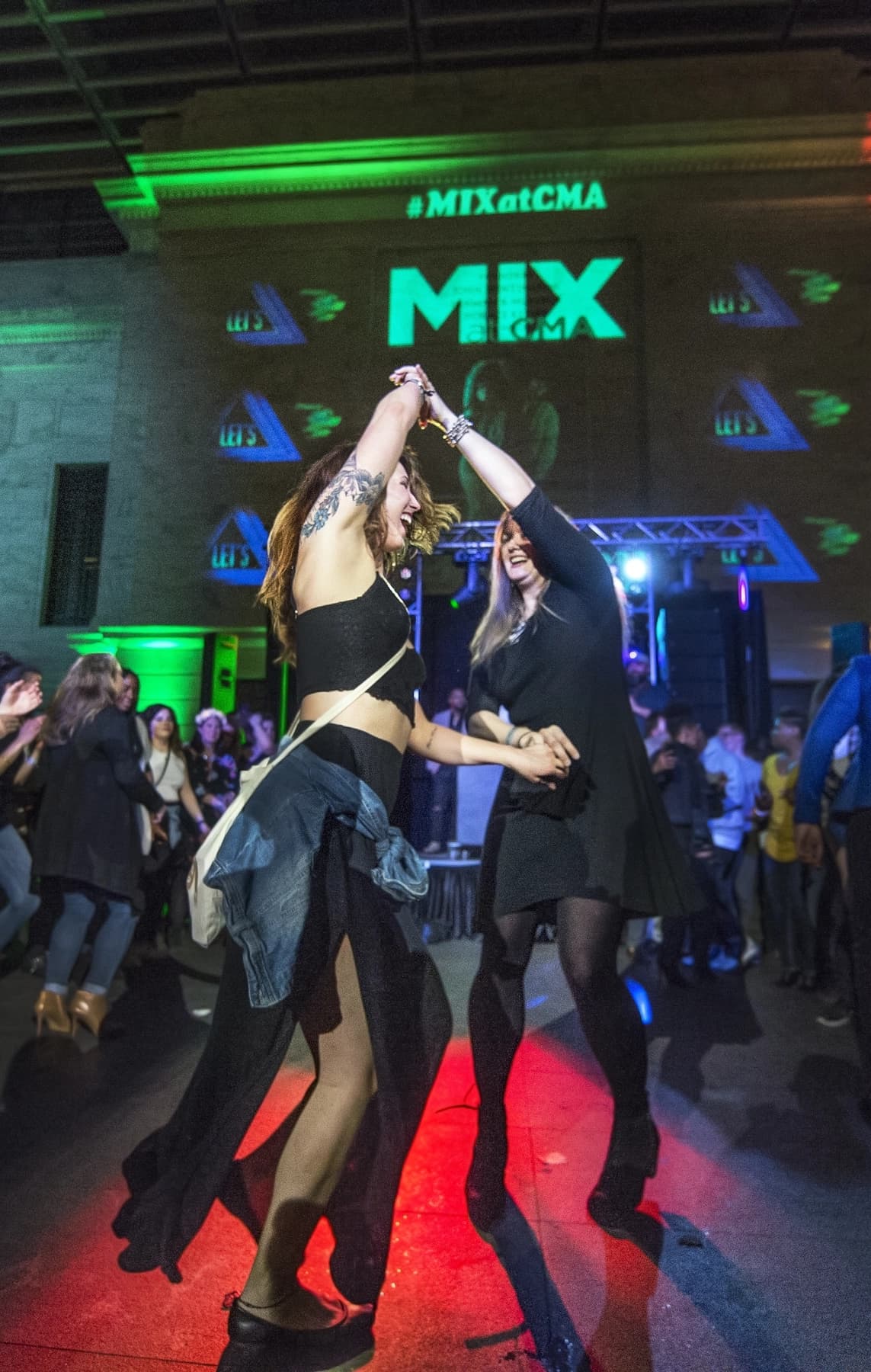
MIX: 90s Homecoming combines September’s back-to-school season with the unforgettable energy of the 1990s. Dust off your Doc Martens or Air Jordans, throw on your freshest fanny pack, neon shirt, or head-to-toe denim outfit, and get ready to dance all night as Cleveland’s iconic duo, Cassie Trainer (DJ Castronaut) and Rachel Hunt (DJ Guilty Pleasures), spin the ultimate nostalgia-fueled set featuring your favorite boy-band classics, girl-group anthems, grunge tracks, and hip-hop beats. Be sure to check out Cassie’s custom-designed interactive selfie station—packed with 90s flare and memorabilia in the style of the Paradise Galleria, an Ohio City vintage “Mall of Dreams,” that she co-owns. From 6:00 to 8:00 p.m., join staff from the CMA’s Studio Go for an art-making activity in which attendees create retro buttons in the bold and fun style of the ’90s. Themed food and drinks inspired by your favorite movies from the decade, including cocktails, beer, and wine, are available to purchase from Bon Appétit. This is how we do it; it’s Friday night!
During this event, MIX attendees can visit the CMA’s special exhibition Takashi Murakami: Stepping on the Tail of a Rainbow with the exception of entering the Yumedono installation in the Ames Family Atrium.
Disclaimer: No full-face masks, heavy face paint, glitter, weapon-like props, or excessively oversized costumes are permitted. All outfits are subject to security screening. The Cleveland Museum of Art may refuse entry to any visitor whose attire does not comply with these requirements.
Song Recital Project: “Echoes of the Heart”
Sunday, September 7, 2025, 2:00–3:30 p.m.
Gartner Auditorium, Suzanne and Paul Westlake Performing Arts Center
Free; No Ticket Required
Song Recital Project presents Jason Fuh (baritone) and John Simmons (piano) in recital “Echoes of the Heart” featuring the following:
- Henri Duparc (1848–1933): Mélodie selections
- Ralph Vaughan Williams (1872–1958): Song cycle “The House of Life” (1903)
Henri Duparc, a pivotal figure in the development of the French mélodie, possessed a rare gift for capturing the emotional essence of poetry in his songs. The chosen selections showcase his diverse palette: the sensual languor of Phidylé, the poignant despair of Lamento, the exhilarating energy of Le Galop, the yearning stillness of Soupir, the haunting atmosphere of Le Manoir de Rosemonde, the tender melancholy of Chanson Triste, and the dramatic sweep of La Vague et la Cloche. Each song is a carefully crafted jewel, characterized by rich harmonic language, expressive vocal lines, and a profound sensitivity to the nuances of the text. Duparc’s mélodies are imbued with a Romantic sensibility, often exploring themes of love, loss, nature, and the inner turmoil of the human spirit.
In contrast, Vaughan Williams’s “The House of Life,” a cycle of six songs drawn from Dante Gabriel Rossetti’s sonnet sequence of the same name, delves into the complexities of love, memory, and mortality with a distinctly English voice. While influenced by the Romantic tradition, Williams’s musical language incorporates modal inflections and a deep connection to English folk song, creating a sound that is both deeply personal and rooted in a national identity. The cycle traces the arc of a passionate relationship, from its initial blossoming to its eventual fading, exploring themes of intense joy, profound sorrow, and the enduring power of remembrance. Through its expressive melodies and evocative harmonies, “The House of Life” offers a powerful and moving exploration of the human heart.
The program is performed with projected texts and translations. Free-will donations are welcomed at the door.
About the Performers
Jason Fuh: jasonfuhbaritone.com
John Simmons: cim.edu/faculty/john-simmons (opens in a new tab)
This performance is made possible through the CMA’s generosity.
Play Day: Healing Hues
Sunday, September 7, 2025, 10:00 a.m.–2:00 p.m.
Ames Family Atrium
Free; No Ticket Required
Play Days at the CMA are free opportunities for families to be creative and curious and connect through art together. Events include music, storybook readings, games, and art making for the whole family. Each event has a theme that relates to an exhibition, artist, or artworks in the CMA’s collection.
Discover the healing power of creativity! Relax, create, and connect as you engage in art making that supports mindfulness, self-expression, and emotional growth.
This Play Day features the following:
- Akron Children’s Stuffed Toy Clinic
- Visit our Akron Children’s health care providers for a quick check-up . . . for your favorite stuffed friend! From head to toe (or tail), we make sure your stuffie is in tip-top shape and ready to enjoy a day at the museum!
- Guided Meditation with Cleveland Clinic Yoga Professional Valerie Williams at 10:30 a.m. and 12:30 p.m.
- PRE4CLE for High-Quality Preschool Options in Cleveland
Join us for a day of reflection, art making, music, and more!
Major support is provided by Akron Children’s.

Omar Sosa Trio: Outside the Box Featuring Yosvany Terry and Julian Miltenberger
Wednesday, September 10, 2025, 7:30–9:00 p.m.
Gartner Auditorium, Suzanne and Paul Westlake Performing Arts Center
Composer, pianist, and bandleader Omar Sosa premieres his new trio, Outside the Box, featuring Yosvany Terry on saxophone and Julian Miltenberger on drums.
Sosa is one of the most versatile jazz artists on the scene today. His musical trajectory traces the diaspora from Cuba to Africa and Brazil; from Central America to Ecuador’s African-descent communities; from San Francisco and New York to his current home base in Barcelona. True to his Afro-Cuban origins, Sosa fashions a spirited vision of uncompromising artistic generosity that embraces humanity at-large. Nominated for seven Grammy Awards and twice for the BBC Awards for World Music, Sosa received a lifetime achievement award from the Smithsonian Associates in Washington, DC, in 2003 for his contribution to the development of Latin jazz in the United States.
More information about Sosa can be found on his website (opens in a new tab).
The Phantom of the Opera (1925)
Sunday, September 14, 2025, 3:00–4:30 p.m.
Gartner Auditorium, Suzanne and Paul Westlake Performing Arts Center
On September 14, the Cleveland Silent Film Festival and Colloquium marks the centennial of a landmark in cinema history: The Phantom of the Opera (1925). This special screening features the film accompanied by its original score, performed live by American Musical Productions’ 17-piece orchestra under the baton of conductor Joseph Rubin.
Lon Chaney’s performance as the phantom still captivates a century later, while the music of the original 1925 orchestral score brings the gothic grandeur of Gaston Leroux’s tale to life.
Wit, Scandal, and Silent-Era Elegance: Lady Windermere’s Fan
Friday, September 19, 2025, 7:30–9:00 p.m.
Gartner Auditorium, Suzanne and Paul Westlake Performing Arts Center
Step into a world of high society and hidden secrets as the Cleveland Silent Film Festival and Colloquium presents Ernst Lubitsch’s Lady Windermere’s Fan (1925), an imaginative silent adaptation of Oscar Wilde’s sharp-tongued comedy of manners.
This silent-era gem is accompanied by a chamber quintet performing live, bringing the film to life with a rich, evocative original compilation score drawn from authentic historic photoplay music. It’s an evening where elegance, irony, and artistry take center stage.
Chalk Festival
Saturday, September 20, 2025, 12:00–5:00 p.m. and Sunday, September 21, 2025, 12:00–5:00 p.m.
Fine Arts Garden
Free; No Ticket Required
The Chalk Festival features sidewalk artistry by professional chalk artists and local community groups, families, and individuals, all using the CMA’s south plaza and walkways that wind through the Fine Arts Garden and down to Wade Lagoon as a colorful canvas.
The Chalk Festival is a modern expression of a Renaissance tradition from 16th-century Italy in which artists copied paintings of the Madonna by Raphael and his contemporaries using chalk on the plazas outside cathedrals.
Everyone can participate at the Chalk Festival! To chalk your own square, purchase a square of pavement (chalk pastels included) at the registration tent: $15 small square (includes a 12-count set of chalk pastels), $20 large square (includes a 24-count set of chalk pastels).
The CMA reserves the right to cover any work that contains a political message, hate speech, or other content that may be inappropriate for a family-friendly program.
Major support is provided by Akron Children’s.

A Cinematic Time Machine: Double Bill of René Clair’s Surreal Visions
Saturday, September 20, 2025, 3:00–4:30 p.m.
Gartner Auditorium, Suzanne and Paul Westlake Performing Arts Center
Presented in conjunction with the CMA’s exhibition Rose Iron Works and Art Deco and in celebration of the centenary of the 1925 International Exhibition of Modern Decorative and Industrial Arts, the moment that birthed the bold elegance of Art Deco, the Cleveland Silent Film Festival and Colloquium presents two avant-garde masterpieces by visionary filmmaker René Clair, brought thrillingly to life with live music performed by Philip Carli and Eric Charnofsky.
First, drift through a dreamlike Paris suspended in time in Paris Qui Dort (1925), Clair’s poetic sci-fi comedy, accompanied by the vibrant compilation score first heard at the film’s Parisian premiere. Then, lose yourself in the surreal spectacle of Entr’acte (1924), Clair’s riotous Dadaist short, performed with a piano four-hands version of Erik Satie’s playful, groundbreaking score just as it was originally experienced.
These two landmark films echo the spirit of experimentation and aesthetic innovation that defined the Art Deco movement and continue to inspire a century later. Don’t miss this mesmerizing afternoon that combines cinema, music, and design in a celebration of timeless modernity.
The event is preceded by a panel discussion—moderated by pianist Eric Charnofsky (Cleveland, OH)—on silent film music by some of the best local and regional practitioners of the art: Philip Carli (Rochester, NY), Rodney Sauer (Louisville, CO), David Blazer (Cleveland, OH), and Donnie Rankin (Ravenna, OH).
Buster Keaton in Go West (1925)
Sunday, September 21, 2025, 3:00–4:30 p.m.
Gartner Auditorium, Suzanne and Paul Westlake Performing Arts Center
Closing out the 2025 Cleveland Silent Film Festival and Colloquium is Buster Keaton’s classic comedy Go West, which also celebrates its 100th year. The film is being presented with a compilation chamber score by Rodney Sauer, who leads our Cleveland-based ensemble. The score is enhanced with sound effects provided by Radio on the Lake Theatre.
Educator Open House
Wednesday, September 24, 2025, 4:00–7:00 p.m.
Susan M. Kaesgen Education Gallery and Lobby
Free; Ticket Required (opens in a new tab)
Save the date! We invite pre-K–12 teachers, curriculum specialists, and administrators to the Cleveland Museum of Art’s Educator Open House on Wednesday, September 24, 2025, from 4:00 to 7:00 p.m.
Come and learn about the variety of programs designed to connect with your scholars through collaborative learning and critical thinking.
Museum educators plan engaging, multimodal, grade-based experiences where art supports student growth across the school curriculum, including pre-K–12 social-emotional learning. Please join us for food, fellowship, raffle prizes, and an opportunity to share with us how the museum can support your work.
Please email schoolprograms@clevelandart.org with any questions regarding this event.
Cleveland Ballet: In Vino Veritas
Friday, September 26, 2025, 7:00–8:30 p.m.
Gartner Auditorium, Suzanne and Paul Westlake Performing Arts Center
While the exhibition In Vino Veritas (In Wine, Truth) celebrates the presence and meaning of wine in prints, drawings, textiles, and objects, Cleveland Ballet interprets the exhibition’s subject through movement with its performance of Walpurgisnacht, a celebration on the eve of May Day, April 30, that marks the end of winter and the beginning of spring. The night known for its debauchery involves celebrations, as well as rituals and bonfires to ward off evil spirits. The Cleveland Ballet’s performance builds on this sense of joyful revelry.
Cleveland Ballet continues the celebration with Picnic, a collection of Pyotr Ilyich Tchaikovsky’s dances for piano and violin choreographed by Cleveland Ballet’s artistic director Timour Bourtasenkov, as well as the lively and energetic “Dance of the Toreadors” from Don Quixote.
In the spirit of In Vino Veritas, join Cleveland Ballet for a glass of wine before the performance at 6:00 p.m. outside Gartner Auditorium. Then at 6:20 p.m., Bourtasenkov gives a Behind the Curtain artist talk to share insights into the performance.
Tuesday in the Atrium with Great Lakes Theater: A Sondheim Showcase
Tuesday, September 30, 2025, 12:00–1:00 p.m.
Ames Family Atrium
Free; No Ticket Required
Step into the world of Sunday in the Park with George as art comes vividly to life! Great Lakes Theater invites you to a special pop-up performance in the Cleveland Museum of Art’s Ames Family Atrium. Stars Jillian Kates and Alex Syiek of Sunday in the Park with George bring Stephen Sondheim’s iconic score to life in a setting where masterpieces already grace the walls. Accompanied by the show’s musical director, Matthew Webb, enjoy a selection of stunning solos and duets from the show, including “Sunday in the Park with George,” “Color and Light,” “Finishing the Hat,” and “Move On.” This unforgettable collaboration beautifully unites visual and performing arts, an inspired partnership between two of Cleveland’s cultural treasures.
The views expressed by performers during this event are their own and do not necessarily reflect the opinions of the Cleveland Museum of Art.
New This Month
New Acquisition: Giambologna’s Fata Morgana
Saturday, August 30, 2025–Tuesday, September 1, 2026
Gallery 117B
Free; No Ticket Required
The Cleveland Museum of Art has acquired Fata Morgana, one of the greatest works by Giambologna (1529–1608), the preeminent sculptor of his generation, and the last known marble sculpture by his hand in a private collection. This rare and internationally renowned figure is being shown in a gallery evoking the Tuscan grotto in which it was originally placed.
In Vino Veritas (In Wine, Truth)
Sunday, September 7, 2025–Sunday, January 11, 2026
James and Hanna Bartlett Prints and Drawings | Galleries 101A–B
Free; No Ticket Required
For millennia, wine has played a significant role not only in the human diet but also in cultural myths, rituals, and festivities. As a result, wine—its ingredients, making, drinking, and effects on the human body and mind—has been a constant muse for artistic creation. The exhibition In Vino Veritas (In Wine, Truth), a phrase coined by the Roman polymath Pliny the Elder, celebrates the presence and meaning of wine in prints, drawings, textiles, and objects made in Europe between 1450 and 1800. Drawn from the museum’s collection, more than 70 works by artists from throughout Europe explore wine’s myths, symbols, and stories. These images reveal how diverse cultures and religions ascribed meaning and transformational properties to the so-called nectar of the gods.
The ancient Greeks believed that the god Dionysus (in Rome, Bacchus) lived within wine: to drink wine was to partake of the god’s power. Fascinated by ancient culture, Italian Renaissance artists, such as Andrea Mantegna and Raphael, imagined scenes of boisterous festivals, or bacchanalia, along with the exploits of Bacchus and his coterie of satyrs, nymphs, and fauns. In Northern Europe, Pieter Bruegel the Elder, and later Jean-Honoré Fragonard, transformed bacchanalia into raucous peasant festivals and sensuous garden parties fueled by wine, at times tinged with moral judgment. Simultaneously, wine played a critical allegorical role in images made within the Judeo-Christian tradition. The Old Testament and Hebrew Bible traced wine’s invention to Noah. Numerous stories from these texts, portrayed by Lucas van Leyden and others, leveraged wine as an important plot element, with the ability to unify and enlighten, or to incapacitate and deceive. Many artists, such as Albrecht Dürer, used wine, grapes, and the vine to symbolize the Catholic rite of the Eucharist and its origin in Christ’s Last Supper. Throughout the exhibition, wine appears in scenes of devotion, harvest, celebration, music making, and transgression, signaling community cohesion as well as the pleasures—and hazards—of surrendering to one’s senses
Generous support is provided by the Malcolm E. Kenney Curatorial Research Fund.
Pintoricchio Magnified: An Immersive Conservation Experience
Through Sunday, August 23, 2026
Gallery 115
Free; No Ticket Required
Through a digital immersive experience, step into the conservation studio and get a behind-the-scenes look at the materials and techniques conservators use to preserve paintings in the CMA collection.
For almost 50 years, Pintoricchio’s Virgin and Child (c. 1490–1500) was in storage at the CMA, its last original layers of blue paint hidden beneath a mask of restoration treatments undertaken in the 1900s. Although considered one of the most significant paintings within the early Italian collection, its complicated restoration history and physical state rendered it largely unexhibitable.
In the most recent conservation treatment, original paint layers were revealed, allowing unparalleled access to Pintoricchio’s original composition, freed from past interventions. This allowed conservators to embark on the rediscovery and reexamination of one of the more damaged paintings within the CMA collection and use cutting-edge technologies to better understand the materials and techniques used by the artist. Through a large digital display, visitors can traverse the layers of the painting and its conservation treatment, examining changing details as if magnified under a microscope.
This exhibition is made possible with support from Jared and Linda Buono Chaney and Carl M. Jenks.
All activities of the Eric T. and Jane Baker Nord Family Conservation Suite are underwritten by the CMA Fund for Conservation.
All digital innovation and technology initiatives at the Cleveland Museum of Art are underwritten by the CMA Digital Innovation Fund.
Eleanor Antin’s Nurse and Hijackers
Tuesday, September 9, 2025–Sunday, January 11, 2026
224B Video
Free; No Ticket Required
In this video, Eleanor Antin draws on the form of popular disaster movies to explore history, contemporary culture, and identity from a feminist perspective. The narrative—a hijacking of a nurse’s plane on its way to Saint-Tropez, France—is enacted by paper dolls, whose voices and gestures are performed by the artist. This unfolds aboard a handcrafted set also made by the artist. Using recognizable styles from film and television of the time, Antin’s feature-length narrative invites viewers to consider the ways that contemporary international politics are represented in the media.
Final Weeks
Takashi Murakami: Stepping on the Tail of a Rainbow
Through Sunday, September 7, 2025
The Kelvin and Eleanor Smith Foundation Exhibition Hall and Gallery
Discover an incredible new exhibition of works from a Japanese artist known for his unique style that simultaneously honors the rich tradition of Japanese art and deploys the cultural energies of anime, manga, otaku, and kawaii in singular contemporary artworks. Visitors can explore how—after shared historical events and trauma—art can address crisis, healing, outrage, and escapist fantasy. In addition to works more than 30 feet wide on view, the centerpiece of the exhibition is the re-creation of the Yumedono, or Dream Hall, from Nara’s Hōryūji Temple complex in the Cleveland Museum of Art’s magnificent atrium. The museum’s deep holdings of Japanese art lead you even more profoundly into the exhibition’s themes. Originating at the Broad in Los Angeles, Takashi Murakami: Stepping on the Tail of a Rainbow is presented with expanded scope at the CMA.
The artwork presented in this exhibition was made in response to three events: the atomic bombings of Hiroshima and Nagasaki by the United States in 1945 during World War II; the March 11, 2011, Tōhoku earthquake and tsunami, the most powerful earthquake ever recorded in Japan, which also caused the Fukushima Daiichi nuclear accident; and the COVID-19 pandemic, which began in 2019. Murakami uses his art to interpret these historical events and their lasting effects. The works explore topics such as how people may change when they are experiencing trauma, how historical events may have caused outpourings of creative and religious fervor, and how art addressing contemporary obsessions as diverse as gaming, the metaverse, trading cards, street fashion trends, anime, and manga can be an entry point to engaging the past.
Art can respond to disaster. Like religion, it can work through crisis and register experiences expressed (and sometimes coded) by and through form. Like religion, art can be a mass phenomenon, a gathering around compelling ideas. It can address crisis directly, offering healing, outrage, or catharsis. It can also offer escapist fantasy. Murakami’s likening of gaming and other forms of entertainment to religion speaks of a spirit of a sort, of collective activities where societal energies are expended, developed, and ritualized.
In the wake of the pandemic, through planning an exhibition at the Kyocera Museum of Art, Murakami turned the lens of his artwork onto the city of Kyoto as both the keeper of many of Japan’s cultural traditions—including ikebana, Kabuki theater, geisha and teahouse traditions, and monumental screen painting—and a site of shifting power structures of religion and politics, both imperial and warrior. Selections of this new work join the exhibition and, newly aligned with Cleveland’s deep holdings of Japanese art, allow the exhibition to go even deeper into its original themes.
The Yumedono in Nara is believed to occupy the same location as the home of Shōtoku Taishi, who converted his father, Emperor Yōmei, into accepting Buddhism after calling for the intercession of Buddha to cure the emperor of an illness. Shōtoku plays a profound role in the history of Japan and has been the focus of powerful religious cults throughout Japanese history. The Yumedono houses the Kuse Kannon (a likeness of Shōtoku), believed to have the power to save people from suffering. Murakami’s re-creation of the Yumedono houses four paintings—Blue Dragon, Vermillion Bird, White Tiger, and Black Tortoise (all from 2024)—that directly present and mine the city of Kyoto through its many overlapping mythologies and traditions.
While it may seem counterintuitive to house four paintings addressing the founding of Kyoto in a historic building from Nara, in doing so, Murakami is creating a powerful meditation on the connection between mythology and art to political power, as well as the hybridity and pliability of Japanese cultural traditions. In moving the imperial capital of Japan to Kyoto in the eighth century, Emperor Kanmu intended to extricate his court from the clerical power structures of Nara. However, to do so, an emphasis was placed on Shōtoku’s role in the area, a necessary alignment with one of Japan’s central figures and heroes. In Kyoto, the Rokkakudō Temple—also founded by Shōtoku and said to enshrine the Nyoirin Kannon, an amulet found by Shōtoku as a child, which is also said to have healing powers—would become an important site of religious pilgrimage, and Kyoto would go on to become both a political and importantly a religious center of Japan.
In placing his Kyoto paintings in the Yumedono, rooting them in Shōtoku’s legacy of healing through the veneration of devotional objects, Murakami testifies to the nature of art and its capacity to align cultural energies, both for individuals and for Japanese society.
Docent guided tours are available on Wednesdays at 6:30 p.m. and Thursdays at 10:30 a.m. The tours are free to all ticket holders. Reserve a ticket for Murakami guided tours.
Private tours to Takashi Murakami: Stepping on the Tail of a Rainbow are also available to ticket holders, for $25 per 10 people. To schedule a tour, please contact grouptours@clevelandart.org or call 216-707-2752.
Docents are available on Fridays, Saturdays, and Sundays from 2:00 to 4:00 p.m. throughout the exhibition to answer questions and provide background information on the artworks. This service is free to all visitors in the exhibition.
This exhibition is presented by Akron Children’s.
Major support is provided by the Womens Council of the Cleveland Museum of Art. Generous support is provided by Yuval Brisker and by the Gottlob family in loving memory of Milford Gottlob, MD. Additional support is provided by Mrs. Viia R. Beechler, GFP Private Wealth, Kenneth H. Kirtz and family, and Frank and Fran Porter.
Vito Acconci: Centers
Through Sunday, September 7, 2025
Gallery 224B
Free; No Ticket Required
In Centers, Vito Acconci faces the camera head-on, attempting to keep his finger directed at the exact center of the screen, which displays his own image. In pointing at himself, the artist also points at the viewer, creating a tension between the two. Of the film, Acconci wrote, “The result (the TV image) turns the activity around: a pointing away from myself, at an outside viewer—I end up widening my focus onto passing viewers (I’m looking straight out by looking straight in).” Acconci started his career in the 1960s as a poet. By the end of the decade, he was a leading figure in the fields of performance, sound, and video art.
From the Earth Through Her Hands: African Ceramics
Through Sunday, September 21, 2025
Gallery 108A
Free; No Ticket Required
African women have worked in ceramics for millennia, yet their accomplishments are underexhibited compared to male artists who sculpted in wood. This rotation considers key western, central, and eastern African ceramics spanning the first through 20th centuries. Three themes highlight their makers’ technical and aesthetic accomplishments: inspiration and instructors; idealized portraits; and practical beauty. The intimate presentation illuminates the deeply historical practice of African women working in ceramics and considers connections between functional and display (“fine art” ceramics). It highlights the technical, training, and aesthetic links among 20th-century female African artists working in ceramics. One of the 10 works is newly acquired (a mid-20th-century bowl by renowned Nigerian ceramicist Ladi Kwali OON MBE), while others have not recently been on view or are being exhibited for the first time.
On-Site Activities
Lunchtime Lecture
Conservation Magnified: Building an Immersive Exhibition
Tuesday, September 2, 2025, 12:00–1:00 p.m.
Gartner Auditorium, Suzanne and Paul Westlake Performing Arts Center
Free; Ticket Required
Speakers: Julianna Ly, Associate Conservator of Paintings and Jane Alexander, Chief Digital Information Officer
Join Julianna Ly, associate conservator of paintings, and Jane Alexander, chief digital information officer, to learn about the complex conservation treatment and collaborative development of an immersive digital exhibition highlighting Pintoricchio’s 15th-century Italian masterpiece, Virgin and Child. Since opening this August, Pintoricchio Magnified: An Immersive Conservation Experience provides an unprecedented digital exploration of the recent multiyear conservation treatment of one of the most damaged paintings within the collection.
Discover how conservators uncovered the complex history of the painting—with the Virgin’s robe appearing brown in the early 1990s, dark blue by the 1990s—and the conservation decision-making process used to ethically reconstruct the damaged area in the most recent treatment. To provide visitors with a behind-the-scenes look at this treatment, digital innovation collaborated with conservation to create an immersive exhibition that aims to bring visitors closer to both the artwork and the process behind its preservation. Through accessible, innovative technology, visitors can self-direct and explore the intricate treatment and layered structure of this important painting for the first time, allowing them to amplify and study specific areas, as if viewing the painting through a microscope.
Line, Shape, and Color: My Very First Art Class
Weekly on Friday, 10:00–11:00 a.m. from Friday, September 5, 2025, until Friday, September 26, 2025
Classrooms B and C
Young children and their favorite grown-up are introduced to art, the museum, and verbal and visual literacy in this playful program. Each class features exploration in the classroom, a gallery visit, and art making. Wear your paint clothes! New topics each class.
Age group: Two to four years old, accompanied by a parent or guardian.
Fees and registration: Cost per session (four Fridays) for adult/child pair $115, CMA members $95
Scholarships are available. For more information, contact familyyouthinfo@clevelandart.org or call 216-707-2469.
Gears and Gadgets: Children’s Saturday Studios
Weekly on Saturday, 10:00–11:30 a.m. from Saturday, September 6, 2025, until Saturday, September 27, 2025
Classrooms B and C, Classrooms F and G
Age groups: Five to seven years old and eight to ten years old.
These open-ended studio classes allow young artists to engage with the museum’s collection while building idea-generation and critical-thinking skills. Each week includes an exploration of galleries, materials, and creative prompts inspired by the CMA’s collection. Sessions run for four weeks, with new themes explored each month.
Explore the playful connections between creativity and discovery! Inspired by decorative artworks, design daring contraptions and craft whimsical kinetic sculptures that blend art and invention.
Scholarships are available. For more information, contact familyyouthinfo@clevelandart.org or call 216-707-2469.
Taste the Art Tours
Sundays Through November 30, 2025, 2:15–3:15 p.m. and Wednesdays September 10–November 26, 2025, 5:45–6:45 p.m.
Ames Family Atrium
Explore the rich history of food and drink in art with a guided tour of In Vino Veritas (In Wine, Truth)—an exhibition celebrating wine in European prints, textiles, and objects from 1450 to 1800—plus other culinary-themed works in the CMA collection.
Enhance your experience at Provenance Restaurant: Enjoy a Chef Douglas Katz menu inspired by the exhibition on Wednesday evenings after the tour, or savor brunch before the tour on Sundays.
To schedule private tours for adult groups of 10 or more, please contact grouptours@clevelandart.org or call 216-707-2752.
Material Matters Gallery Talk
Gesso: From Ground to Gold
Wednesday, September 10, 2025, 6:00–7:00 p.m.
Ames Family Atrium
Speaker: David Piurek, Senior Conservation Technician for Paintings and Frames Restorer
Explore the world of gilded frames with the CMA’s senior conservation technician for paintings and frames restorer, David Piurek. His tour focuses on the importance of gesso as the structural and aesthetic base of some of the CMA’s most ornate frames. Piurek discusses the techniques of pastiglia, burnishing, punchwork, recutting, and compo and brings hands-on examples for guests to get a closer look.
Sensory-Friendly Saturday
Saturday, September 20, 2025, 9:00–10:00 a.m.
Free; No Ticket Required
Sensory-Friendly Saturday events offer adaptations to meet diverse sensory-processing needs every third Saturday of each month from 9:00 to 10:00 a.m. Guests on the autism spectrum, people experiencing dementia, and those of all ages who have intellectual or developmental disabilities are invited to participate in a calming museum experience with less stimulation in a section of the museum’s galleries before they open to the public—reducing crowds, noise, and distractions.
Guests can explore the galleries at their own pace and share this time and space with open-minded members of the community.
Things to Know While Planning Your Visit
- All guests must pass through metal detectors at the museum entrance.
- Attendees are encouraged to bring adaptive equipment, including wheelchairs, walkers, and noise-reducing headphones and technology. The Cleveland Museum of Art also offers a limited number of wheelchairs.
- The museum store and café open at 9:00 a.m. on these Saturdays.
- Sensory-Friendly Saturday events are free. Parking in the CMA garage is $14 for nonmembers and $7 for members.
- Once participants enter, they are welcome to stay for the day. The museum opens to the public at 10:00 a.m.
The Dr. John and Helen Collis Lecture
Virtue and Adornment in Byzantium: Beautiful Bodies in the Christian East
Sunday, September 28, 2025, 2:00–3:00 p.m.
Gartner Auditorium, Suzanne and Paul Westlake Performing Arts Center
Join Alicia Walker as she explores attitudes toward women and adornment in the Byzantine world. Walker discusses how jewelry and clothing decorated with Christian signs offered women ways to ornament the body while still conforming to religious values that censured personal embellishment and promoted modest piety. At the same time, Byzantine society remained connected to pre-Christian cultural traditions, allowing for Greco-Roman goddesses and other female mythological characters to persist as models for the cultivation of physical beauty and allure. Walker shows how Byzantine women navigated these diverse possibilities, displaying moral virtue and social refinement—but also captivating charm—through their dress and adornment.
This lecture is sponsored by the Hellenic Preservation Society of Northeastern Ohio.

Art and Conversation Tours
Tuesdays, 10:15–10:45 a.m.
Ames Family Atrium
Free; Ticket Required
Join us for 30-minute close-looking sessions, from 10:15 to 10:45 a.m. on Tuesdays. This program offers a focused look at just a couple of artworks, versus the traditional 60-minute public tours of the museum’s collection.
Daily Guided Tours
Tuesday–Sunday
Ames Family Atrium
Free; Ticket Required
Public tours are offered daily at 11:00 a.m. and 1:00 p.m., Tuesday through Sunday, and at 11:30 a.m. and 1:30 p.m. on Tuesdays. Art and Conversation Tours are offered at 10:15 a.m. on Tuesdays.
Date-Night Tours
Fridays, 6:15–7:15 p.m.
Ames Family Atrium
Free; Ticket Required
Explore the evolving world of romance with Dating Through the Ages, a unique tour tracing the art of courtship across centuries. From the elegance of ancient Greek vases capturing subtle flirtations to medieval carvings telling tales of chivalric love, this tour offers a glimpse into how courtship rituals have shifted over time. Experience the allure of Rococo paintings, where opulent attire and coded gestures hinted at romantic intentions, and learn the dating dynamics of Victorian England. Each piece tells a story of love and desire, offering a cultural journey through the art of attraction across civilizations and eras.
The museum also offers daily guided tours and Art and Conversation tours. To schedule private tours for adult groups of 10 or more, please contact grouptours@clevelandart.org or call 216-707-2752.
Takashi Murakami Guided Tours
Thursdays Through September 4, 2025, 10:00–11:30 a.m.
Wednesdays Through September 3, 2025, 6:30–8:00 p.m.
Ames Family Atrium
Join a docent for a guided tour of Takashi Murakami: Stepping on the Tail of a Rainbow. Learn how the artist bridges the worlds of fine art and mass media through his signature “Superflat” style and iconic characters. This tour offers insight into Murakami’s influences and techniques and the cultural commentary embedded in his dazzling creations.
To schedule private tours for adult groups of 10 or more, please contact grouptours@clevelandart.org or call 216-707-2752.
Continuing Exhibitions
Arts of the Maghreb: North African Textiles and Jewelry
Through Sunday, October 12, 2025
Arlene M. and Arthur S. Holden Gallery | Gallery 234
Free; No Ticket Required
This exhibition spotlights the rich artistic traditions of Morocco, Algeria, and Tunisia during the late 1800s and the early 1900s, through a display of elaborate textiles and fine jewelry in the collection of the Cleveland Museum of Art. These works introduce the specialized skills of North African artists, both Amazigh (Berber) and Arab, Muslim and Jewish, and the diverse aesthetics of their multifaceted communities. The CMA’s founder J. H. Wade II began forming the collection during his personal travels across the region, and many works are on view for the very first time.
This exhibition is made possible with support from the Malcolm E. Kenney Curatorial Research Fund and Anne T. and Donald F. Palmer.
Rose Iron Works and Art Deco
Through Sunday, October 19, 2025
Julia and Larry Pollock Focus Gallery | Gallery 010
Free; No Ticket Required
In the early 1900s, as Cleveland experienced rapid economic growth and the expansion of its iron and steel industries, Hungarian ornamental blacksmith Martin Rose moved to the city and founded Rose Iron Works. It soon became one of the leading manufacturers of decorative metalwork in the United States. Trained in Budapest and Vienna in the Art Nouveau tradition, Rose was interested in artistic and technological innovations. In 1925, a groundbreaking international exhibition in Paris presented modern decorative arts—a style that later became known as Art Deco. Rose’s compatriot and a designer active in Paris, Paul Fehér joined the Rose company in Cleveland a few years later. Their artistic collaboration resulted in some of the best Art Deco ironwork in the country, including the celebrated Muse with Violin Screen (1930), now in the CMA’s collection. This exhibition explores Rose’s transition from Art Nouveau to Art Deco, focuses on his 1930s commissions, and places his work in the European context. It also emphasizes the importance of Rose Iron Works, a family-run Cleveland company that for 120 years has been adorning some of the city’s most notable buildings.
Major support is provided by the Malcolm E. Kenney Curatorial Research Fund. Additional support is provided by the Simon Family Foundation, a supporting foundation of the Jewish Federation of Cleveland.
Reinstallation of Krishna Lifting Mount Govardhan
Through Sunday, November 2, 2025
Gallery 243 | Nancy F. and Joseph P. Keithley Gallery | Gallery 244
Free; No Ticket Required
The monumental sculpture of Krishna Lifting Mount Govardhan returns to the permanent collection galleries for the first time since its new reconstruction was completed in 2021. To complement this major addition, 13 stone and bronze works from India, Cambodia, and Indonesia are also brought out for display.
Landscapes by Arnold Chang: A Retrospective and Recent Acquisitions
Through Sunday, November 9, 2025
Clara T. Rankin Galleries of Chinese Art | Gallery 240A
Free; No Ticket Required
This installation reviews the artistic career of Arnold Chang (张洪) (Zhang Hong, American, born 1954) and celebrates the museum’s recent acquisition by Chang, Secluded Valley in the Cold Mountains, a pivotal work that marks his breakthrough as an international contemporary ink artist. Showcasing 18 works by the artist, plus the CMA’s Number 5, 1950 (1950) by Jackson Pollock, the exhibition explores Chang’s formative years, which eventually culminate in free and exploratory ways that include the use of photography and color.
Refocusing Photography: China at the Millennium
Through Sunday, November 16, 2025
Mark Schwartz and Bettina Katz Photography Galleries | Gallery 230
Free; No Ticket Required
From 1949 to 1978, photography in the People’s Republic of China was reserved for governmental propaganda: Its function was to present an idealized image of life under Chairman Mao and communist rule. In 1978, as China opened to global trade and Western societies, photography as documentation, art, and personal expression experienced a sudden awakening. Personal photographic societies formed, art schools began teaching photography, and information on Western contemporary art became available.
In the late 1990s, a new generation of Chinese artists, many initially trained as painters, revolted against traditional academic definitions of photography. Building on the work done in the previous decades by Western artists, they dissolved the boundaries between photography, performance art, conceptual art, and installation. In so doing, they brought photography into the foreground in Chinese contemporary art. This exhibition presents works from the museum’s collection by eight key artists from that generation.
Born between 1962 and 1969, these artists grew up during the Cultural Revolution (1966–76), when conformity was required and past intellectual and artistic products—whether artistic, family history, or documentary—were banned and destroyed. They also experienced the cultural vacuum that followed this erasure. As adults, these artists lived in a radically different China—newly prosperous, individualistic, and consumerist. They helped develop a new visual idiom, producing artworks that addressed their country’s recent history, its swift societal transformation, and their own resultant shift in identity as Chinese.
This exhibition is made possible with support from the Seven Five Fund.
Practice and Play in Japanese Art
Through Sunday, November 30, 2025
Kelvin and Eleanor Smith Foundation Japanese Art Gallery | Gallery 235A
Free; No Ticket Required
From the 1200s to the 1800s, developing a balanced set of military (bu, 武) and cultural (bun, 文) skills was considered important for the elites of Japan’s warrior class. The artworks in this gallery relate to these divergent yet complementary pursuits. Horse riding and falconry were among the martial arts, along with archery. Poetry competitions tested people’s ability to compose verse on the spot, and incense games challenged them to identify particular scents. The practices of calligraphy, music, painting, and games of strategy, often informed by Chinese precedents, provided multiple paths to personal cultivation and community.
Native North American Textiles and Works on Paper
Through Sunday, December 14, 2025
Sarah P. and William R. Robertson Gallery | Gallery 231
Free; No Ticket Required
On display from the permanent collection are two Diné (Navajo) textiles from the late 1800s, as well as a watercolor from the 1930s made by Oqwa Pi, a member of the San Ildefonso Pueblo.
Ancient Andean Textiles
Through Sunday, December 14, 2025
Jon A. Lindseth and Virginia M. Lindseth, PhD, Galleries of the Ancient Americas | Gallery 232
Ancient Andean weavers created one of the world’s most distinguished textile traditions. This installation features examples utilizing the tapestry technique, particularly esteemed in antiquity.
Indian Painting of the 1500s: Continuities and Transformations
Through January 11, 2026
Gallery 242B
Free; No Ticket Required
When the 1500s began, the dominant style of Indian painting was flat and abstract with a limited, mainly primary color palette. By the 1520s, a new style emerged with greater narrative complexities and dramatic energy that was to be foundational for later developments. Concurrently, some artists began working in the pastel palette and with delicate motifs reinterpreted from Persian art.
Then, around 1560, with the exuberant patronage of the third Mughal emperor Akbar (born 1542, reigned 1556–1605), artists from different parts of the empire and trained in a variety of Indian styles came together in a new imperial painting workshop. The workshop was led by Persian masters brought from the imperial court in Iran. The formation of Mughal painting shaped by Akbar’s taste for drama and realism had a lasting impact on the cultural life of India. With its naturalism and vibrant compositions, the revolutionary new style was distinct from its predecessors, both Indian and Persian. The paintings in this gallery trace the dramatic changes that occurred during the 1500s alongside compositions that artists chose to retain and reinvent. Central to this story is a manuscript of the Tuti-nama (Tales of a Parrot), an illustrated collection of fables made for Akbar around 1560–65 now in the Cleveland Museum of Art.
British Portrait Miniatures: Tokens of Love and Loss
Through Sunday, February 15, 2026
Ellen and Bruce Mavec Gallery | Gallery 203B
Free; No Ticket Required
Exchanged as personal mementos or as signs of political allegiance, portrait miniatures first appeared in the French and English courts of the 1520s. Evolved from the art of medieval illuminated manuscripts, miniatures provided a less expensive and more personal alternative to traditional full-scale portraiture. Portrait miniatures were portable luxury objects treasured by their owners both for the cherished portrait and the precious materials from which they were crafted. These might include gold, enamel, diamonds, and locks of human hair.
Their small scale and the fact that people often wore them as jewelry and carried them on their person conveys a different type of intimacy than larger scale portraits. Sitters are often depicted more informally and with the gaze of a particular loved one in mind. Miniatures remained popular for nearly three centuries. The advent of photography in 1839 offered a more cost-effective method of capturing a keepsake likeness, and the portrait miniature faded from fashion.
Juxtaposition and Juncture in Korean Modern and Contemporary Art
Through April 1, 2026
Korea Foundation Gallery | Gallery 236
Free; No Ticket Required
The term “juxtaposition” here refers to the side-by-side placement of two or more artworks that are significantly different from one another. Featuring Korean modern and contemporary objects that the CMA has collected over the past 15 years, this thematic exhibition juxtaposes them to create an exciting juncture of connections through their visual and material contrasts.
While the selected works were created by Korean artists from diverse backgrounds and different generations, they make a poignant meeting place illustrating how objects from the past inspired contemporary artists to create new experiences and artistic expressions.
Adorning Ritual: Jewish Ceremonial Art from the Jewish Museum, New York
Through Sunday, May 10, 2026
Various Galleries
Free; No Ticket Required
The Cleveland Museum of Art houses an encyclopedic collection, giving visitors valuable insights and perspectives into the lives and cultures of people around the world and throughout time. To enhance its permanent collection and to more fully represent the stories and objects important to our communities, the museum is displaying art on loan from the Jewish Museum, New York, in six galleries.
Most of the works are ritual objects relating to Judaism or the lives of Jewish people, from silver Torah finials to an inlaid marble panel commemorating a marriage. The objects have been placed in context with other works of the same time or region, allowing a fuller narrative to unfold. As you encounter these objects in the galleries, we invite you to consider their relationships to the other works in these spaces.
In addition to the loans from the Jewish Museum, two examples of Jewish ceremonial art from local collections are on display in two additional galleries: an etrog box recently acquired by the Cleveland Museum of Art and a miniature Torah ark on loan from the Mishkan Or Museum of Jewish Cultures in Beachwood, Ohio.
Principal support is provided by Rebecca and David Heller. Additional support is provided by Michael Frank and the late Pat Snyder, Richard A. Horvitz and Erica Hartman-Horvitz, Mr. and Mrs. David D. Kahan, and the Simon Family Foundation, a supporting foundation of the Jewish Federation of Cleveland.
Pintoricchio Magnified: An Immersive Conservation Experience
Through Sunday, August 23, 2026
Gallery 115
Free; No Ticket Required
Through a digital immersive experience, step into the conservation studio and get a behind-the-scenes look at the materials and techniques conservators use to preserve paintings in the CMA collection.
For almost 50 years, Pintoricchio’s Virgin and Child (c. 1490–1500) was in storage at the CMA, its last original layers of blue paint hidden beneath a mask of restoration treatments undertaken in the 1900s. Although considered one of the most significant paintings within the early Italian collection, its complicated restoration history and physical state rendered it largely unexhibitable.
In the most recent conservation treatment, original paint layers were revealed, allowing unparalleled access to Pintoricchio’s original composition, freed from past interventions. This allowed conservators to embark on the rediscovery and reexamination of one of the more damaged paintings within the CMA collection and use cutting-edge technologies to better understand the materials and techniques used by the artist. Through a large digital display, visitors can traverse the layers of the painting and its conservation treatment, examining changing details as if magnified under a microscope.
This exhibition is made possible with support from Jared and Linda Buono Chaney and Carl M. Jenks.
All activities of the Eric T. and Jane Baker Nord Family Conservation Suite are underwritten by the CMA Fund for Conservation.
All digital innovation and technology initiatives at the Cleveland Museum of Art are underwritten by the CMA Digital Innovation Fund.
Children’s Armor from the Imperial Habsburg Armory in Vienna
Through Sunday, June 4, 2028
Jack, Joseph, and Morton Mandel Armor Court | Gallery 210A
Free; No Ticket Required
Four historically significant suits of armor from the Imperial Habsburg Armory in Vienna, Austria, are being displayed in the armor court for the next three years. The selection focuses on children’s armor and weapons to illustrate how a military education played an important role in training boys to become a knight. A few objects from the CMA’s own collection of children’s armor are being shown alongside these magnificent loans.
Principal support is provided by the Jack, Joseph, and Morton Mandel Foundation.
CMA Community Arts Center On-Site Activities
2937 West 25th Street, Cleveland, OH 44113
Free Parking in the Lot off Castle Avenue | Estacionamiento gratis en la Avenida Castle
The Creative Table
Monthly on Each Second Friday, 5:00–7:00 p.m.
Free; No Ticket Required | Gratis; No Se Requiere Boleto
Join us on the second Friday of each month for a laid-back evening of conversation and creativity. Whether you’re a painter, poet, photographer, or just curious, come hang out, sip some tea or coffee, and share what you’ve been working on!
All mediums are welcomed. The event is an open-discussion form.
Únase a nosotros el segundo viernes de cada mes para una noche relajada de conversación y creatividad. Ya sea que sea pintor, poeta, fotógrafo o simplemente curioso, venga a pasar el rato, tome un té o un café y comparta en qué ha estado trabajando.
Todos los medios son bienvenidos. El evento tiene un formato de discusión abierta.
Comic Club | Club de Cómic
Saturday, September 6, 2025, 11:00 a.m.–1:00 p.m.
Free; No Ticket Required
Be inspired and venture into the world of storytelling with artist Kobe Saunders. Work in the company of others to develop your own style and collaborate!
Explore the long history of sequential art through various genres and cultures including newspaper comic strips, American superhero comics and graphic novels, Japanese manga, and media adaptations (film and television) of these stories. Practice techniques to improve drawing and storytelling skills with a focus in character design, visual language, and panel structure.
Inspírate y aventúrate en el mundo de la narración de historias con el artista Kobe Saunders. ¡Trabaja en compañía de otros para desarrollar tu propio estilo y colaborar!
Explora la larga historia del arte secuencial a través de varios géneros y culturas, incluidas las tiras cómicas de periódicos, los cómics y novelas gráficas de superhéroes estadounidenses, el manga japonés y las adaptaciones de medios (cine y televisión) de estas historias. Practique técnicas para mejorar las habilidades de dibujo y narración con un enfoque en el diseño de personajes, el lenguaje visual y la estructura de paneles.
Mini Phlorae: Sculpting the Future Bloom With | Ariel Vergez
Friday, September 5, 2025, 5:00–7:00 p.m.
Free; No Ticket Required | Gratis; No Se Requiere Reserva
Join us at the Community Arts Center to create miniature models of Spina Phlorae sculpture—an abstract spine-flower hybrid symbolizing community resilience. This hands-on sculptural lab introduces form, symbolism, and ecological imagination in clay, wire, or modular materials. Free. All ages. All experience levels. Supplies included.
This event is supported by the Transformative Arts Fund.
The Transformative Arts Fund (TAF) is a Cleveland initiative that invests in bold public art projects designed to strengthen communities and spark cultural renewal. With TAF support, BlackBrain Group launched the Art Garden (TAG)—a living art district in the Near West Side communities.
Through murals, monumental sculptures, and creative hubs, TAG blends storytelling, mentorship, and neighborhood pride. Local artists and youth apprentices take part in the “No Pressure, No Diamonds” program, learning to scale their visions from sketch to wall while leaving a lasting cultural mark.
The Art Garden is more than an art trail—it’s a community-rooted movement, transforming vacant spaces into vibrant landmarks and weaving creativity into the daily fabric of Near West Side life
Ariel Vergez, AKA BlackBrain, is a seasoned artist with a rich heritage and a passion for storytelling through art. Born in the Dominican Republic and raised in Florida, BlackBrain is the child of two immigrants who came to the United States in search of opportunity and met each other while working in the service industry. Growing up in a household where art was a daily presence, BlackBrain pursued his passion for art at the collegiate level, studying industrial design at the Cleveland Institute of Art.
With a background in product and graphic design, BlackBrain has worked with world-class brands and has a keen understanding of the importance of storytelling in design. He has fused that experience toward his first love: art. This experience is evident in BlackBrain’s art series, which features unique narratives, a cross-wiring of pop culture icons, and a déjà vu feeling of nostalgia.
With a portfolio that spans different mediums and styles, BlackBrain continues to push the boundaries of what art can be and challenge our perceptions of the world around us. His art is a dissection of ancient and pop cultural storytelling; it has a diversity that makes his art unique and relatable while maintaining mystery and depth.
Únase a nosotros en el Centro de Artes Comunitarias para crear modelos en miniatura de la escultura Spina Phlores, un híbrido abstracto de columna vertebral y flor que simboliza la resiliencia de la comunidad. Este laboratorio escultórico práctico presenta la forma, el simbolismo y la imaginación ecológica en arcilla, alambre o materiales modulares. Gratis. Todas las edades. Todos los niveles de experiencia. Suministros incluidos.
Chalk Party | Fiesta de Tiza
Sunday, September 7, 2025, 12:00–3:00 p.m.
Free; All Ages; Drop In; No Reservation Required | Gratis; Todas Edades; Sin Cita Previa; No Es Necesario Registrarse
Join us at the Community Arts Center for an all-ages chalking event! Help us adorn the CAC with your drawings and imagination! Make your own stencil and explore chalking techniques inside and outside. Engage with Coco Dixon, founder of Coco’s Selfie space as she performs a live Demo using her Chalky powder! Everyone can participate in the Chalk Party! Take your new skills to the CMA Chalk Festival on September 20-21 to help us transform the Fine Arts Garden into a colorful canvas!
¡Te invitamos al Centro de Artes Comunitarias para un evento de tiza para todas las edades! ¡Ayúdanos a adornar el CAC con tus dibujos e imaginación! Haz tu propia plantilla y explora las técnicas de tiza en interiores y exteriores. Interactúa con nuestros artistas destacados, Danté Rodríguez y John G., mientras crean sus propias obras de tiza a gran escala durante el evento.
¡Todos pueden participar en la Fiesta de la Tiza! ¡Lleva tus nuevas habilidades al Festival de Tiza CMA el siguiente fin de semana y ayúdanos a transformar el Jardín de Bellas Artes en un lienzo colorido!
Mini Phlorae: Sculpting the Future Bloom With |Con Ariel Vergez
Friday, September 5, 2025, 5:00–7:00 p.m.
Free; No Ticket Required | Gratis; No Se Requiere Reserva
Join us at the Community Arts Center to create miniature models of Spina Phlorae sculpture—an abstract spine-flower hybrid symbolizing community resilience. This hands-on sculptural lab introduces form, symbolism, and ecological imagination in clay, wire, or modular materials. Free. All ages. All experience levels. Supplies included.
This event is supported by the Transformative Arts Fund.
The Transformative Arts Fund (TAF) is a Cleveland initiative that invests in bold public art projects designed to strengthen communities and spark cultural renewal. With TAF support, BlackBrain Group launched the Art Garden (TAG)—a living art district in the Near West Side communities.
Through murals, monumental sculptures, and creative hubs, TAG blends storytelling, mentorship, and neighborhood pride. Local artists and youth apprentices take part in the “No Pressure, No Diamonds” program, learning to scale their visions from sketch to wall while leaving a lasting cultural mark.
The Art Garden is more than an art trail—it’s a community-rooted movement, transforming vacant spaces into vibrant landmarks and weaving creativity into the daily fabric of Near West Side life.
Ariel Vergez, AKA BlackBrain, is a seasoned artist with a rich heritage and a passion for storytelling through art. Born in the Dominican Republic and raised in Florida, BlackBrain is the child of two immigrants who came to the United States in search of opportunity and met each other while working in the service industry. Growing up in a household where art was a daily presence, BlackBrain pursued his passion for art at the collegiate level, studying industrial design at the Cleveland Institute of Art.
With a background in product and graphic design, BlackBrain has worked with world-class brands and has a keen understanding of the importance of storytelling in design. He has fused that experience toward his first love: art. This experience is evident in BlackBrain’s art series, which features unique narratives, a cross-wiring of pop culture icons, and a déjà vu feeling of nostalgia.
With a portfolio that spans different mediums and styles, BlackBrain continues to push the boundaries of what art can be and challenge our perceptions of the world around us. His art is a dissection of ancient and pop cultural storytelling; it has a diversity that makes his art unique and relatable while maintaining mystery and depth.
Únase a nosotros en el Centro de Artes Comunitarias para crear modelos en miniatura de la escultura Spina Phlores, un híbrido abstracto de columna vertebral y flor que simboliza la resiliencia de la comunidad. Este laboratorio escultórico práctico presenta la forma, el simbolismo y la imaginación ecológica en arcilla, alambre o materiales modulares. Gratis. Todas las edades. Todos los niveles de experiencia. Suministros incluidos.
Community Arts Center Open Studios | Estudios abiertos del centro de artes comunitario
Saturdays and Sundays, 1:00–4:00 p.m.
Free; No Ticket Required
Enjoy free, drop-in art making. A monthly theme connects community, art, and exploration.
Disfrute el arte con toda la familia. Gratis para participar. Cada mes presenta una temática connectando el arte, la comunidad y la exploración.
Family FUNday | Día de Alegria Familiar at the CAC
Monthly on Each First Sunday, 1:00–4:00 p.m.
Free; No Ticket Required
Enjoy free family fun and explore art celebrating community. This monthly event features family-friendly games, movement-based activities, and art making, open to all ages and abilities! Join us in September for Chalk Party!
Únase a nosotros para divertirse con familia cada mes, mientras exploramos el arte celebrando comunidad. Gratis para participar. Juegos para toda la familia, actividades basadas en movimientos, y creación de arte. ¡Abiertas a todos los edades y habilidades! Únase a nosotros en septiembre para la Fiesta de Tiza!
The Cleveland Museum of Art is pleased to present a variety of performing arts events. The views expressed by performers during these events are their own and do not necessarily reflect the opinions of the Cleveland Museum of Art.
The 2025–26 Performing Arts Series is sponsored by the Musart Society. This program is made possible in part by the Ernest L. and Louise M. Gartner Fund, the P. J. McMyler Musical Endowment Fund, and the Anton and Rose Zverina Music Fund.

The Cleveland Museum of Art is funded in part by residents of Cuyahoga County through a public grant from Cuyahoga Arts & Culture.
Performing arts programs are supported in part by the Ohio Arts Council, which receives support from the State of Ohio and the National Endowment for the Arts.
Performances at Transformer Station are generously supported by the Cleveland Foundation.
All exhibitions at the Cleveland Museum of Art are underwritten by the CMA Fund for Exhibitions. Principal annual support is provided by Michael Frank and the late Pat Snyder, the Kelvin and Eleanor Smith Foundation, the John and Jeanette Walton Exhibition Fund, and Margaret and Loyal Wilson. Major annual support is provided by the late Dick Blum and Harriet Warm and the Frankino-Dodero Family Fund for Exhibitions Endowment. Generous annual support is provided by two anonymous donors, Gini and Randy Barbato, Cynthia and Dale Brogan, Dr. Ben and Julia Brouhard, Brenda and Marshall Brown, Gail and Bill Calfee, the Leigh H. Carter family, Dr. William A. Chilcote Jr. and Dr. Barbara S. Kaplan, Joseph and Susan Corsaro, Ron and Cheryl Davis, Richard and Dian Disantis, the Jeffery Wallace Ellis Trust in memory of Lloyd H. Ellis Jr., Leigh and Andy Fabens, Florence Kahane Goodman, Janice Hammond and Edward Hemmelgarn, Linda Harper, Robin Heiser, the late Marta and the late Donald M. Jack Jr., the estate of Walter and Jean Kalberer, Mrs. Nancy M. Lavelle, Eva and Rudolf Linnebach, the William S. Lipscomb Fund, Bill and Joyce Litzler, Lu Anne and the late Carl Morrison, Jeffrey Mostade and Eric Nilson and Varun Shetty, Sarah Nash, Courtney and Michael Novak, Tim O’Brien and Breck Platner, Dr. Nicholas and Anne Ogan, William J. and Katherine T. O’Neill, Henry Ott-Hansen, the Pickering Foundation, Christine Fae Powell, Peter and Julie Raskind, Michael and Cindy Resch, Marguerite and James Rigby, William Roj and Mary Lynn Durham, in memory of Dee Schafer, Betty T. and David M. Schneider, Elizabeth and Tim Sheeler, Saundra K. Stemen, Paula and Eugene Stevens, the Womens Council of the Cleveland Museum of Art, and Claudia Woods and David Osage.
The Cleveland Museum of Art is funded in part by residents of Cuyahoga County through a public grant from Cuyahoga Arts & Culture.
Education programs, exhibitions, and performing arts programs are supported in part by the Ohio Arts Council, which receives support from the State of Ohio and the National Endowment for the Arts.
All education programs at the Cleveland Museum of Art are underwritten by the CMA Fund for Education. Principal support is provided by Dieter and Susan M. Kaesgen. Major annual support is provided by Brenda and Marshall Brown, Eva and Rudolf Linnebach, Medical Mutual of Ohio, Shurtape Technologies, and the Kelvin and Eleanor Smith Foundation. Generous annual support is provided by an anonymous donor, Gini and Randy Barbato, the M. E. and F. J. Callahan Foundation, Dr. William A. Chilcote Jr. and Dr. Barbara S. Kaplan, Char and Chuck Fowler, the Giant Eagle Foundation, Linda Harper, the late Marta and the late Donald M. Jack Jr., Susan LaPine, Bill and Joyce Litzler, the Logsdon Family Fund for Education, Sarah Nash, Courtney and Michael Novak, William J. and Katherine T. O’Neill, the Pickering Foundation, William Roj and Mary Lynn Durham, Suzanne Cushwa Rusnak and Jeff Rusnak, in memory of Dee Schafer, Betty T. and David M. Schneider, the Sally and Larry Sears Fund for Education Endowment, Roy Smith, Paula and Eugene Stevens, the Trilling Family Foundation, Jack and Jeanette Walton, and the Womens Council of the Cleveland Museum of Art.
All activities of the Eric T. and Jane Baker Nord Family Conservation Suite are underwritten by the CMA Fund for Conservation. Principal annual support is provided by an anonymous donor and the Parker Hannifin Corporation. Major annual support is provided by Cathy Lincoln, Eva and Rudolf Linnebach, and the Dawn M. Neff Endowed Fund for Conservation. Generous annual support is provided by an anonymous donor, Gini and Randy Barbato, Claudia Bjerre and Andrea Senich, Brenda and Marshall Brown, Dr. William A. Chilcote Jr. and Dr. Barbara S. Kaplan, Linda Harper, the late Marta and the late Donald M. Jack Jr., Albert Leonetti and Ruth Anna Carlson, Dr. and Mrs. John T. Lai, June and Simon K. C. Li, William and Joyce Litzler, Sarah Nash, Courtney and Michael Novak, William J. and Katherine T. O’Neill, the Pickering Foundation, William Roj and Mary Lynn Durham, Anya and John Rudd, Dr. Isobel Rutherford, in memory of Dee Schafer, Betty T. and David M. Schneider, Paula and Eugene Stevens, Jack and Jeanette Walton, and the Womens Council of the Cleveland Museum of Art.
All digital innovation and technology initiatives at the Cleveland Museum of Art are underwritten by the Digital Innovation Fund. Principal support is provided by two anonymous donors, the Bishop Parker Foundation, Walt and Kathy Fortney, Mr. William N. Hanson in loving memory of Susan H. Hanson, the late Dr. and Mrs. Gilles Klopman, the late Mr. Arthur S. Rundle, John and Leanne Sauerland, and Mrs. Meredith M. Seikel. Major support is provided by Mr. and Mrs. Tim Elek, Jr. and the Trilling Family Foundation.
###
About the Cleveland Museum of Art
The Cleveland Museum of Art (CMA) is renowned for the quality and breadth of its collection, which includes more than 66,500 artworks and spans 6,000 years of achievement in the arts. The museum is a significant international forum for exhibitions, scholarship, and performing arts and is a leader in digital innovation. One of the foremost encyclopedic art museums in the United States, the CMA is recognized for its award-winning open access program—which provides free digital access to images and information about works in the museum’s collection—and is free of charge to all. The museum is located in the University Circle neighborhood with two satellite locations on Cleveland’s west side: the Community Arts Center and Transformer Station.
The museum is supported in part by residents of Cuyahoga County through a public grant from Cuyahoga Arts & Culture and made possible in part by the Ohio Arts Council (OAC), which receives support from the State of Ohio and the National Endowment for the Arts. The OAC is a state agency that funds and supports quality arts experiences to strengthen Ohio communities culturally, educationally, and economically. For more information about the museum and its holdings, programs, and events, call 888-CMA-0033 or visit cma.org.